

There inevitably comes a time when we have to grow up and become responsible adults. This is a physiological and societal norm. But whether it is a successful psychological fact is another story. Our childhood is riddled with films that glorify our pre-pubescent years with characters that actively seek to defy the maturing process. Disney’s Peter Pan and Steven Spielberg’s Hook promotes the ‘Peter Pan complex’ and its ingrained desire to stay young forever and ever in order to live happily ever after, have fun but never grow old. Well, mentally at least. In Home Alone, Kevin McCallister rebels against his parents and is carelessly left to his own devices in a world without adults, building up to the most wonderful time of the year. However, Kevin gets a call to action when he needs to do the household shopping and defend his property from thieves. This denotes a level of maturity on his part. A maturity that presents itself after he has devoured a gluttonous amount of ice-cream and run around the mansion-sized house screaming in a cock-a-hoop fashion.
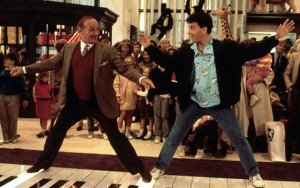
Similarly, in Big and 13 Going on 30, a child is magically thrust into the future to experience what it is like to be a grown-up, whilst retaining their young and impressionable mind. Playing Chopsticks and Heart and Soul on giant piano keys in the middle of a toy shop and dancing along to Michael Jackson’s Thriller to get the party started makes Tom Hanks and Jennifer Garner appear endearing when they are actually just performing as their inner child is telling them to. Despite how exciting it is to revert back to being a kid, looks can be deceiving. Each of these films has a moral ending to express the importance of growing up; they are ambitious and want to start their own family life. Is it just me or are well imagining the families to be something like the Bluths in the aptly named Arrested Development or the Gallaghers in Shameless (both UK and US)?

Flicking through to see what’s just been added, I noticed that Lynn Shelton’s comedy Say When is now on Netflix. This fits in perfectly. Say When stars Keira Knightley as Megan; a woman experiencing a quarter life crisis. With this concept of refusing to grow up or accept responsibilities and being mentally stunted in terms psychological maturity, here are some recent ‘indie’ films that echo the mentality of so-called arrested development.
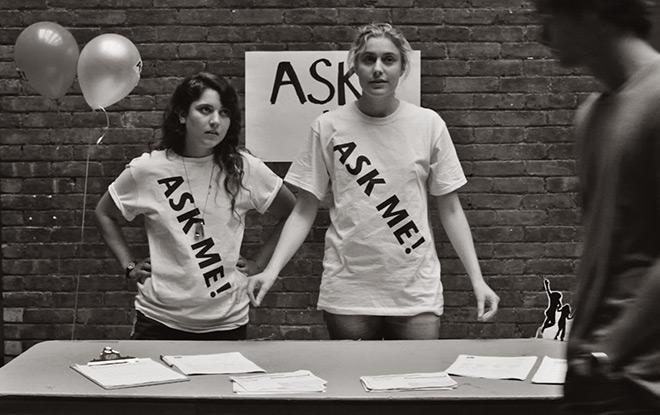
Frances Ha (2012)

Frances Halladay (Greta Gerwig) play-fights, talks in ‘mumblecore’ style without thinking through what she is saying, relies on her insular relationship with best friend Sophie (Mickey Sumner) and lives day-to-day as an apprentice for a dance company. When she has to move out on her own she is faced with the struggles of being a creative single woman in the hustle and bustle of New York City.
Frances’ flighty and ‘scatty’ nature, accompanied by the vignettes of her off-beat antics to the upbeat tune Thème de Camille (an homage to French New Wave cinema) adds to her endearing charm with lines such as “I’m so embarrassed. I’m not a real person yet”. Her lack of credit card, dependency on affluent friends to put her up and flair for the dramatics project her as a lovable character who is young at heart and mind.
I like everything about this movie. While it has been argued Frances Ha is a ‘hipster film’ that is aware of itself as much as Lev and Benji’s apartment is – I don’t care. It has the erratic charm of a contemporary Woody Allen film, centred around a female lead that shines in black-and-white glory. Frances Ha is my Modern Love.
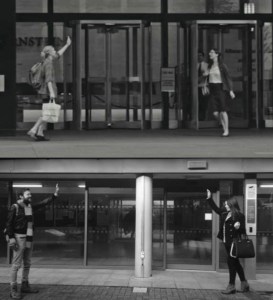
This is my own dramatisation:
Dark Horse (2011)
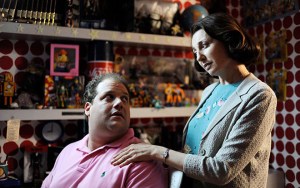
Todd Solondz directs Jordan Gelber as Abe; a 30-year-old man who not only lives at home with his parents but works for his father Jackie (Christopher Walken). And if this wasn’t enough to convince you that Abe is a ‘manchild’ who is in need of a hefty shove from the nest, he is also an avid collector of toys.
Abe’s lifestyle is often questioned by people around him and becomes an uncomfortable notion when he falls in love with Miranda (Selma Blair); a divorcée who has moved back home and is not sure how to handle Abe’s affections. In the style of Solondz’s Palindromes, which shows a 13-year-old girl played by different actresses of age and race throughout the film, Dark Horse highlights the protagonist’s overwhelming naïveté.
Watch out for Donna Murphy popping up anywhere and everywhere. Murphy plays Marie the secretary who discourages Abe on several occasions as he attempts to pursue his interest in Miranda. By the end of the film, we are left with a bittersweet climax and Marie’s involvement in the story get even more interesting. I think she is the dark horse of the film really…
Jeff, Who Lives at Home (2011)
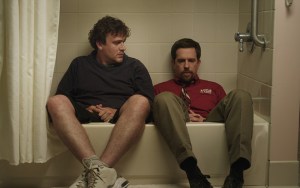
In a similar vein to Dark Horse, Jason Segel is Jeff, Who Lives at Home with his mother Sharon (Susan Sarandon) in the basement. Constantly being urged to get up and do something constructive with his life, other than masturbating and smoking weed, Jeff is sent on a simple errand to fix the shutter on a door. However, this is no mere task of drudgery; it is a mission that leads him on an unexpected adventure to follow his destiny.
Jeff is a mild-mannered and lethargic scruffy, hoodie-wearing brother to Pat (Ed Helms), who he is in direct contrast with. Pat is white collar worker whose wife Linda (Judy Greer) is not fulfilled in their marriage. All of the characters’ paths converge as Jeff pursues his path to discover the purpose he has been waiting to land in his lap.
Part of the narrative I did not anticipate was Susan Sarandon’s storyline. Having to nag and encourage Jeff to do something, Sharon has an alternative glimmer of hope with a clandestine office romance. A series of flirtatious instant messages transpire to be sent from a female friend and Sharon doesn’t quite know how to take it. There should be a sequel all about Sharon.
The Lifeguard (2013)

Kristen Bell joins the ranks of the quarter life crisis brigade as Leigh London who has reached a stalemate in her life. She is no longer happy being a writer or having casual relationships that do not lead anywhere. Her decision, as the tagline states “This Summer Growing Up is Optional”.
Leigh keeps reminding her family and friends that she is 29 (not 30) as a justification for clinging onto her past and taking time out to reassess her plans during her “lost” dilemma. Upon returning home, Leigh smokes weed, stays out late, has consensual sex with a teenager and get a job as a lifeguard.
I really like Kristen Bell. I happen to think she is sweet and embodies the young-at-heart persona well. Although similar to Emma Roberts and her slew of indie films, I was taken by surprise by her underrated performance. Bell can play funny and frantic in Forgetting Sarah Marshall and The Boss (I have never seen Veronica Mars) so the voice of Frozen and Gossip Girl is taking it in another direction in The Lifeguard.
Tiny Furniture (2010)

Lena Dunham suffers from a lack of direction as a film studies graduate named Aura. Whereas her mother Siri (Laurie Simmons) is a successful photographer, operating a business out of her own home: taking pictures of tiny furniture. The apron strings are far from severed as Aura turns up on the doorstep with her suitcase and hamster to reclaim her old room.
Aura’s attitude is very up-front and self-indulgent concerning her misery, which can be seen in her comedy-drama series Girls. This is also reflected in the movie poster: “Aura would like you to know that she’s having a very, very hard time.” She acts infantile and callow around her mother and sister Nadine (played by her real-life sister Grace Dunham) and is ambivalent about her next steps in the outside world.
I will watch anything Lena Dunham is in. She reminds me of Amy Schumer in that they are both so articulate and funny with a natural confidence. Dunham and Schumer could talk me into anything and I would believe whatever they say.
Young Adult (2011)

Mavis Gary (Charlize Theron) considers herself to be successful: she is the ghost writer for a series of young adult novels (Enid Blyton’s Malory Towers meets Gossip Girl) and escaped her hometown to live in Minneapolis (AKA “Mini-Apple)”. However, when she returns to Mercury, Minnesota following the announcement of her high-school boyfriend Buddy (Patrick Wilson) celebrating the birth of his new baby, Mavis sees this as a warped opportunity to win him back from his wife Beth (Elizabeth Reaser).
Adamant that Buddy is trapped in an unhappy marriage, Mavis takes on the personality of the teenage characters she writes about; blurring reality as she struggles to finish the final book in the franchise. With sharp dialogue from Diablo Cody (Juno and Jennifer’s Body), the darkly witted sarcasm anchors Mavis’ stunted emotional state.
Best scene: the awkward baby naming party when Mavis unleashes her anger to a crowd of bemused Mercurians after Buddy rejects her advances. Charlize Theron plays a fantastically flawed character that should have won her another Oscar. After seeing this film multiple times, I find myself saying “Gross” a lot in Mavis’ disdainful tone and frequently hungry for KFC and powdered doughnuts.
Young Adult has a great soundtrack, including Teenage Fanclub’s The Concept and Veronica Salt’s Seether. After the pensive final scene, the end credits play Diana Ross’s When We Grow Up which will have you dancing along to the deliriously upbeat flute solo.

Not only do I see myself in each and every one of these characters, there is one that stands out in particular. I like to play-fight, although I cannot dance. I fall down a lot, but I would not eh! to Adam Driver touching me on the shoulder. On that note, please allow me to say Ahoy, sexy! and I hope we all get to stay forever young.
 Fourth Wall Breach
Leave a comment