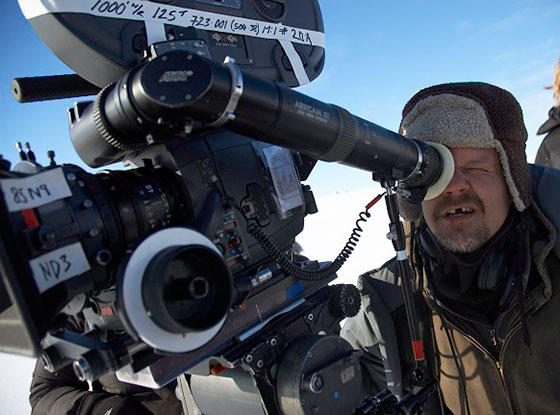
Look through the Glass Eye of horror with Larry Fessenden…
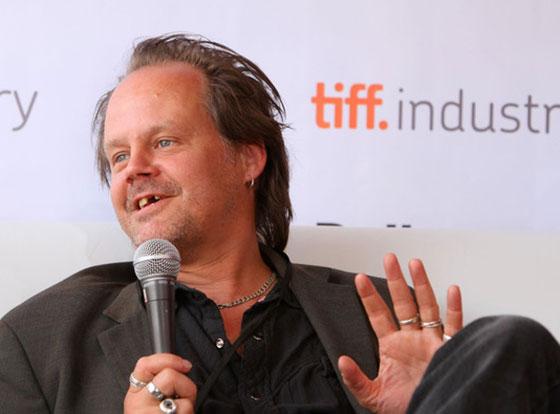
I had the pleasure of speaking with independent filmmaker Larry Fessenden from the comfort of my own home one evening via Skype. His maniacal laughter and animated tone discussing the horror genre immediately arrested me with an ironic ease.
Fessenden boasts a myriad of roles in his filmography which includes cinematography, editing, writing, acting, directing and producing credits. “My films aren’t that available in the UK. Although, I am working on it and I’m hoping to get some traction. I have a box-set coming out in America and I think you guys are ready. I think you are emotionally ready for my box-set!”
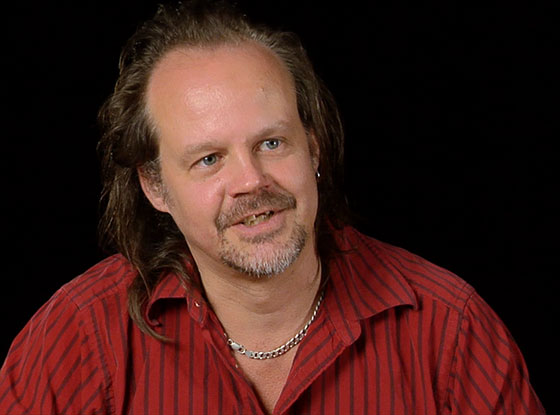
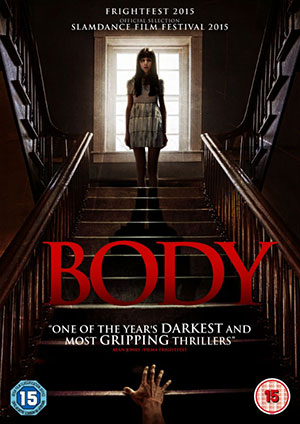
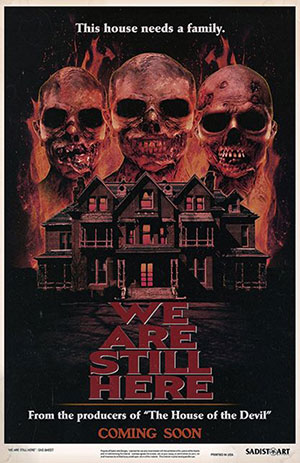
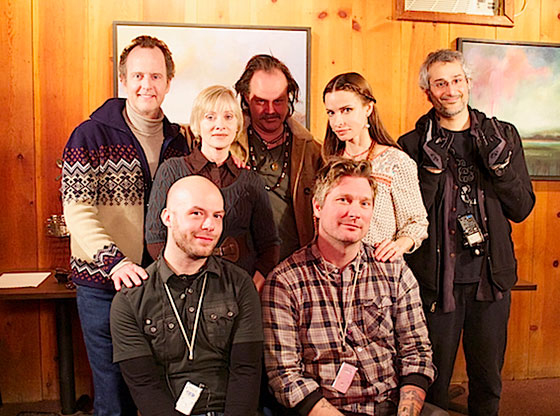
At this year’s Film4 FrightFest producer, director and actor Larry Fessenden starred in Body, directed by Dan Berk and Robert Olsen as well as Ted Geoghegan’s We Are Still Here, both released in 2015. With an established career in horror film, Fessenden recalls his experience with fans at past festivals.
“I came to FrightFest maybe two years ago. It was the most delightful, warm group of people. I always joke that horror fans are the sweetest people. They’re taking their entire year’s holiday to go watch decapitations, werewolves and people being slaughtered [LAUGHS] but they’re very dedicated fans and I always feel honoured when they know who I am. In general it’s a great atmosphere there. I never know what is going on out there but I was well treated by a lot of people. A lot of people asking for autographs! It is a great festival and a lot of drinking can be had which is a plus! When I was at FrightFest there was a hurricane in New York City so I was stuck in London. It was perfect! This meant I was forced to watch more horror films and do more drinking so it was just the right thing!”
Can you tell us a bit about the characters you play in both Body and We Are Still Here?
“In Body I like to say I play the title character. It is the story of three gals who set out on an evening of fun and they go out to visit one of their friend’s house. It becomes clear once they’re in this house – this enormous mansion – that it’s not the friend’s house at all and they have actually broken in. They’re still enjoying their naughty evening and then the caretaker shows up and they panic and push him down the stairs. He lies there; possibly dead, possibly paralysed but definitely a problem they have to resolve. It becomes a thriller about these gals’ choices about what to do. Do they just call the police and admit they have broken in? Or should they do something darker and more sordid? You can imagine the choices they make [LAUGHS] they take us in an unfortunate direction. My character is really lying on the floor a great deal whilst bearing witness to the choices they make.”
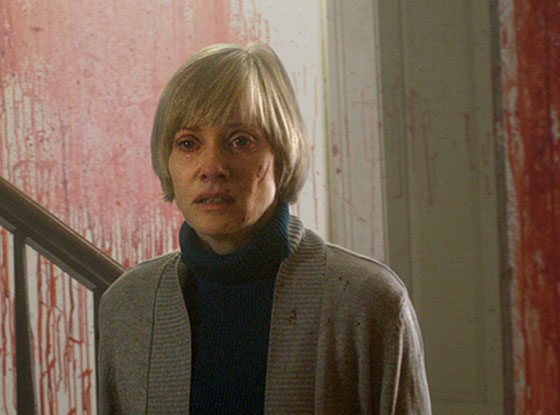
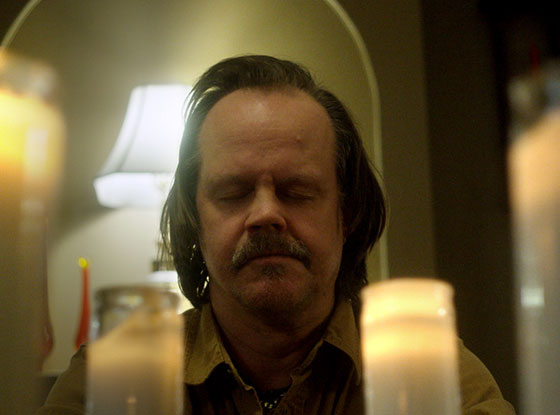
“In We Are Still Here – a lovely ghost story – a couple goes upstate in New York City in New England in the snowy winter while grieving over the loss of their teenage son who died in a car accident. They become aware that the house is haunted. My character comes in as an emotional support. Also my wife is a medium who can talk to the dead so they are hoping we can get in touch with their child and sort things out. Anyway – things go horribly wrong [LAUGHS] as they do in all of these films!”
When you read the script what attracted you to star in Body?
“I liked that it was about moral choices. I always find that interesting and very nail-biting. You always wonder “what would I do?” I guess I would lie and cheat and try to get out of this in any way I could. Or would I have the spine to face up to what I have done? I like a movie that asks these kinds of questions. The other thing that appealed to me was the fact the girls discuss false stories that could get them out of trouble and make us flash to those versions of the narrative. I get to play the “rapist” or the “intruder who is aggressive” to add a bit of fun to the narrative even though that isn’t who the guy really is and they imagine what if he tried to molest us? I thought that was very clever in terms of filmmaking to have a Rushammon style of story unfold. Both of those things were very appealing as a producer and I knew some of the actresses as well. It just seemed like a nice project to be involved in.”
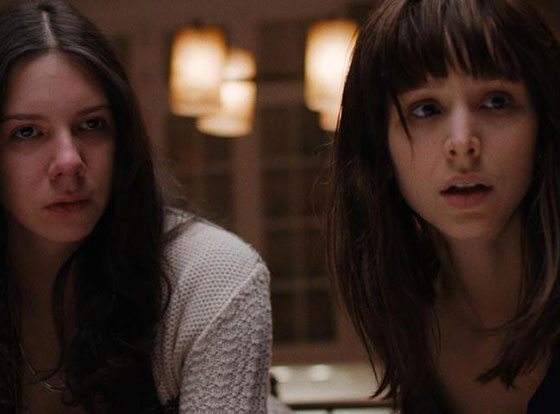
“It’s disturbing because it is very possible how a lot of these things happen: a couple of teenagers make a mistake and they try to cover up their tracks but get deeper and deeper into it and turn on each other. It has happened many times so it is cool to track it. Also, I think the actors are great in the beginning – the girls – just setting up the naturalism and the ‘good times’, so to speak.”
Which directors and films would you say you have been greatly influenced by in your career in horror films?
“I grew up in the 1970s so when I was really young all we had was a television as means to watch old movies. I did, indeed, watch all of the old horror films from the 1930s like Frankenstein (1931) and Creature from the Black Lagoon (1954). All the black-and-white films at the time felt very spooky and atmospheric; very Gothic in retrospect. I also like that the creatures were misunderstood and were in some way given a dimension so they weren’t just villainous. I grew up on that sort of thing. I distinctly remember watching Night of the Living Dead (1968) on television and it didn’t conform to that cosy, nostalgic formula. It was shocking in its immediacy and the nihilism to show horrors were much different. That shook me out of childhood and I enjoyed movies like The Texas Chainsaw Massacre (1974). In the 1970s I veered from straight horror movies to directors like Martin Scorsese, Roman Polanski and Francis Ford Coppola were big influences and, of course, Stanley Kubrick later on. It’s not an unusual collection of heroes I have, really. Great filmmakers from the 1970s like Robert Altman who were telling stories that were very gritty but George A. Romero was a great transitional director for me. What a treasure! I was involved in the documentary Birth of the Living Dead (2013) and I met him once at Sitges Film Festival and he was a generous and fun guy.”
From your comments about your taste in horror films transitioning from “straight” horror films as a child to movies with a violent and social commentary – how do you feel horror films have evolved in contemporary cinema? How does mainstream horror differ from an independent producer’s perspective?
“I think we’ve had highs and lows. The horror of the 1970s I really liked and they seemed to be very visceral as well as trying to shock. I think after Halloween (1978) Hollywood realised they could make mainstream horror movies. After The Last House on the Left (1972), Wes Craven started making movies like A Nightmare on Elm Street (1984) which was a very creative film but felt like it was becoming very mainstream and not as challenging as what I like. I always liked Polanski as his attention to detail and mood was his main agenda, not gore. Later on, I liked the first Saw (2004) about the choices you make. The ‘torture-porn’ trend that’s often spoken of from the 1980s was not my favourite period in horror. Then I love the Japanese horror films with the creepy children crawling out the television! I found that kind of thing terrifying. I did like Paranormal Activity (2007) well enough and did enjoy the new way to tell ghost stories and actually put the camera down on the tripod and let sound do the work. If you really analyse it horror is constantly reinventing itself and it can be a really great and creative genre. The only thing is when you get stuck in these cycles; when one movie is a success you have to repeat it ad nauseam and there is no room for something new. That’s why we make indie movies like Dan Berk, Robert Olsen and Ted Geoghegan’s films which draw on from such movie legends as Lucio Fulci and so on. There’s not a lot to complain about!”
How do you feel about reboots and remakes? Do you have a negative view regarding them or are they helping classics and originals by giving them a greater exposure to modern audiences who may not have seen or heard about them prior to the remake?
No. I have nothing but a negative view of them. I feel this way but there are essential exceptions to bring up. For example, as much as we might like the Vincent Price version of The Fly (1958), the remake by David Cronenberg in 1986 is one of the greatest horror films of all time in my opinion. Similarly, The Thing (1982) was one of the greatest remade horror movies. So it is absurd to say remakes are bad but I think that when we bring up the topic we are mainly thinking of these tepid 1990s MTV-style, “let’s put pretty boys in all of the roles” kind of reboots that are so bland I can’t even remember what movies we are talking about! What is there? The Last House on the Left (2009), all of The Texas Chainsaw Massacre reboots and there is The Thing (2011) prequel. Who cares about any of this?”
“The problem with remakes is that the story does not come from the time they are in. Therefore they do not have any vitality. All of the best horror movies and narrative films come because they are the result of the time we are living in and they are an expression of how people are. But, to be measured in this response as I did mention The Fly (1986) and The Thing (1982), I think the Dawn of the Dead (2004) remake by Zack Snyder was great. So they are exceptions. The reason The Fly (1986) worked as a remake wasn’t “Oh, let’s put our latest editing techniques, 45 degree shutter frame and use handsome models inside of the original with everyday looking people.” It worked because it was an AIDS metaphor and was made during this absolutely terrifying time and it was the right way to update that story. In the 1980s it had a new significance and it felt like it had a purpose.”
Fessenden’s independent production company Glass Eye Pix has provided ample support to burgeoning horror filmmakers since it was established in 1985. The company’s importance is best described on the homepage by Filmmaker Magazine: “one of the indie scene’s most productive and longest-running companies”. The success of the company continues as 2015 marks its 30th anniversary.
“I’m always celebrating! We’re going to ramp up the website and display old photos to commemorate the work. I also have a number of new releases coming out and a new radio play as part of the Tales from Beyond the Pale collection of audio dramas. I also have a book coming out. We’ll have more products but we are also just going to celebrate the work with all of the collaborators who have gone through the doorways of Glass Eye Pix production office. Hopefully, there will be a longevity and sustainability in this business which is so cut-throat.”
Can you tell me a bit about the first ever production you worked on for Glass Eye Pix?
“Actually I found an old poster of it and it is for an old movie called Experienced Movers (1985) that had the little glass eye icon attached. It was a little caper film about a robbery of a French art museum by some criminals and it’s a totally mad, crazy, sprawling video I made when I realised you could make feature films on video and make them cheaply. It’s a crazy enterprise which I have never really brought out because it has a lot of pirated music on it! So it could not be distributed. It’s also an insane little film that premiered in New York City on 2nd November 1985, although I have decided to claim October as the month of my 30th anniversary. I have mapped it out but I need to do something about it now! It is no coincidence that many of my films have premiered in the ‘Fall’. It’s a perfect time of year to be doing all of this. Also there is that one episode of Tales from the Crypt: And All Through the House (1989) has that crazy Santa Claus sequence. I think Christmas is just asking for it! Although my favourite ghost story is actually Scrooge. It’s not often thought of as a ghost story but it is.”
Which modern horror film has had the greatest impact on you?
“A recent horror film that I really liked was The Mist (2007). I found that to be the ultimate horror film. It has a single location, shot over a 254 hour time period which I love. There is something very chilling about a film that is so concise and contained. It has monsters; it has a transcending feeling of dread which is rarely captured in film. It also has the true horror which is when people interact, the false religion, insanity and the inability to communicate. It has the controversial ending which I think was awesome because it was so distressing. Horror should leave you unsettled. There is nothing worse than concluding with an upbeat ending and hope for the future because there is none.”
Body and We Are Still Here are out to buy on DVD and Blu-ray. You can also watch We Are Still Here currently streaming on Amazon Prime.
Interview by Antony Smith
 Fourth Wall Breach