
Firstly, I loved the original 1998 Japanese version… except for ONE thing:
The white-coloured font of the English subtitled text.
Whyyyyyyyyyyyyyyyyyyy?
It proved to be a challenge for me.
It’s almost impossible to read when so much of the background is also white: from brightly-lit daytime scenes to the many TV screens we see.
I admit, I am not fluent in Japanese and the only other language I (vaguely) know is GCSE German. (I got a B.) I hold my hand up and my head down in shame.
But this is one, minor flaw.
In case you’re not familiar with The Ring, the story centres on a cursed videotape that dooms anyone who watches it… to die… in 7 days.
Arrrggghhhh!
In this What X Taught Me About Y article, I’ll mostly be referring to the 2002 English-language remake, directed by Gore Verbinski and starring Naomi Watts, Martin Henderson, David Dorfman, and Brian Cox.
This is a strong remake (IMHO), a great horror overall, and inspirational metaphor for viral video content.
Let’s start with the opening sequence and the urban legend intro…
Two teenagers are just hanging out when their casual chat segues into gruesome gossip:
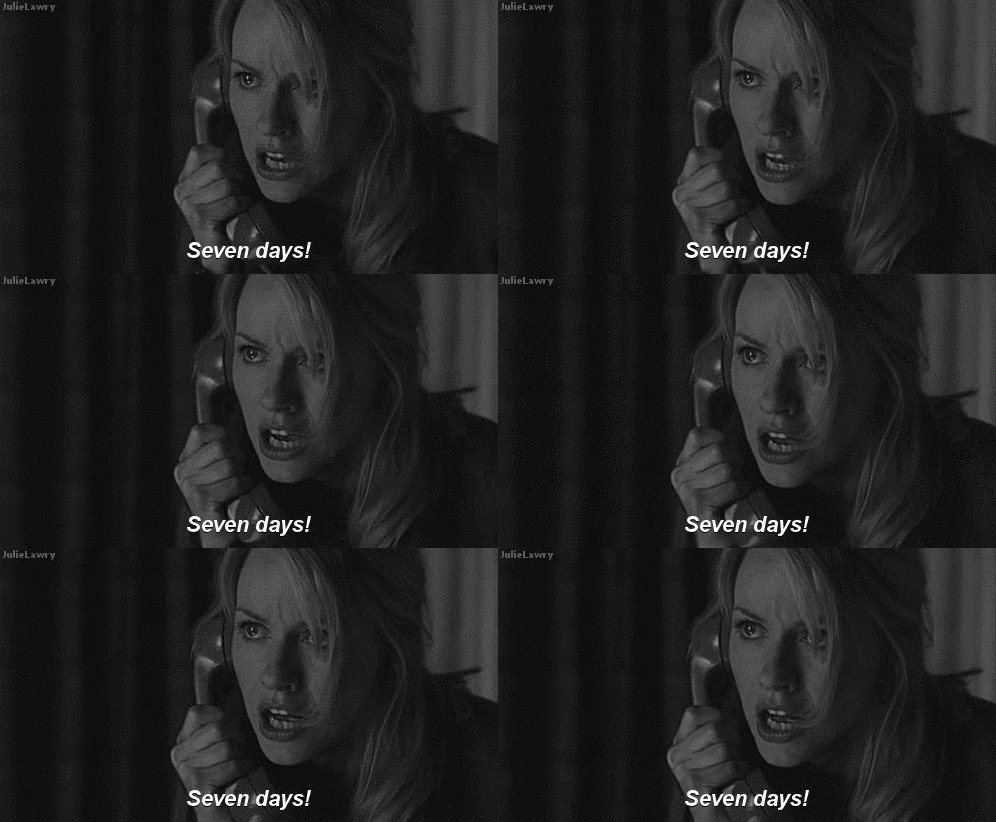
“You watch a tape and then, you die in seven days.”
It soon moves from rumour to reality as one of the two girls has really watched the video, doesn’t believe anything untoward will happen, then gets the infamous telephone alert, and dies.
Immediately, there are marketing parallels because this is exactly how viral content starts.
Not as polished promos, but something that resembles a genuine conversation (like a rumour about an urban legend), and something that feels passed on by word-of-mouth, not pushed on you like a hard-selling ad.
The best content doesn’t feel like sales and marketing. It feels like something you’ve discovered.
You.
And there’s the watching of the tape…
It’s really a mysterious montage that gives me Un Chien Andalou vibes and feels like it could have been created during the avant-garde Surrealism movement, by the likes of Luis Buñuel and Salvador Dalí.
It’s experimental, completely out of context and devoid of explanation.
I mean, can you decipher a spinning chair, a ladder, a well, distorted faces, a woman standing directly in front of a mirror without the camera visible from behind?
Nope.
Didn’t think so.
It’s a bunch of unsettling, fragmented imagery, but it’s scroll-stopping moment.
- Modern viral videos often start mid-action, make no immediate sense, and force your brain to engage with it.
- This ‘confusion’ (when it’s intentional) creates curiosity.
- This curiosity drives views/ watch times.
Notably, the videotape in The Ring isn’t a polished, branded product.
It’s hella abstract and open to interpretation with no explanation of where it came from, who made it, or what it’s intended message for the viewer is.
And that’s exactly why it makes an impression because you’re intrigued and your brain wants to make sense of it.
Wait for it — the “copy” reveal…
In the film, journalist Rachel (Watts) survives, but not by solving the mystery of Samara: the long, dark-haired, well-dwelling entity of a little girl who targets its victims from another plane.
No…
Rachel inadvertently stumbles upon a loophole that saves her son, but is too late for the love interest:
If you make a copy of the tape and show it to someone else, you’re safe!
We see Rachel mentally put the pieces of the puzzle together as to why she didn’t die after the 7-day countdown, when said love interest (Noah) dies. (Despite Noah watching the tape after Rachel did and after Rachel assumes she’s put Samara’s nefarious plan to rest.)
Rachel already made a copy.
And she did it almost immediately during her investigation, then showed it to Noah (fate sealed), so she has been safe for the majority of the film’s running time without even knowing it.
Remember those ‘chain letter’ messages you got in the 90s? The ones you had to pass on to someone else and tell them to do the same otherwise it was bad luck?
It’s like that, except it’s more like a horror urban legend with much higher stakes involved.
This where the theme of virality comes in…
The video spreads because people have to share it. While brand marketing (hopefully) isn’t built on existential dread, the principle still applies:
People share what creates a strong reaction.
Again, nothing terminal or terrifying.
Another marketing parallel is the replication.
Virality isn’t always about views only, because people watch and they share, remix, and reference it.
But, what makes something go viral?
Here are some influencer examples:
- Zach King: “Short magical videos” that start with a visual illusion already in play, luring you in to watch and see how it works.
- MrBeast: From Beast Games to Beast Philanthropy. Many of his videos are fast-paced, high-stakes, big-win challenges, including the real-life Squid Games!
- Alix Earle: Engaged audiences with their “Get Ready With Me” (GRWM) videos on TikTok.
- CelinaSpookyBoo: Shares their own brand of comedy sketches, ‘Dad jokes,’ and paranormal clips, also on TikTok.
And some brand examples, too:
- Duolingo: Comically chaotic, narrative-driven TikToks with “just an owl tryna vibe” as the main character.
- Ryanair: Whether you like the airline or not, its TikTok game is topping the charts with absurdist, self-aware humour.
None of these feel like traditional ads, as they are content first and marketing second. (Notice how they don’t lead with a logo or the branding before the story.)
And, here’s where AI content can go wrong…
AI has made it easier than ever to create content quickly, but when AI videos miss the mark, it’s usually because they:
- Feel inconsistent or glitchy.
- Lack narrative structure.
- Rely on novelty without meaning behind it.
- Create visual confusion… but the wrong kind. (There’s a difference between intrigue and incoherence.)
The Ring works because it’s strange with intent. Whereas bad AI content is strange by accident.
What brands can learn…
You don’t need a cursed videotape to go viral, don’t worry…
To help your video content to spread, try:
- Starting with a hook, not a logo. (Delete. That. Logo. Slide.)
- Creating a ‘curiosity gap.’
- Use storytelling, even in short form clips.
- Embrace abstraction, but give it meaning.
Think in series, not one-offs, because the goal is to be shared, talked about, and remembered.
Welcome the (micro)drama!
EXTRA: Fun facts about ‘The Ring’
- “The 2001 UK DVD release [of the Japanese OG] back cover carries a disclaimer, stating that the distributor accepts no responsibility “for any injuries or fatalities that may occur during or after the viewing of this videocassette.”” (Courtesy of IMDb.)
- Ahead of the The Ring (2002) premiere, an abstract ad was aired, featuring the cursed video footage only, without any mention of the film. Not until further ads were released nearly a month later. (Courtesy of IMDb.)
- You can watch the videotape footage in full as an Easter egg on the 2002 remake DVD, as part of the special features.
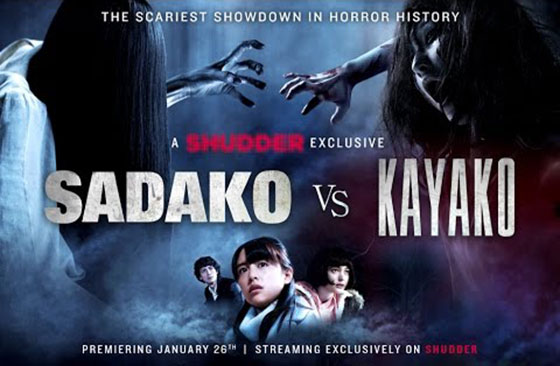
- Did you know there’s a cross-over film, much like Freddy vs. Jason and Alien vs. Predator… but one that faces-off The Ring with The Grudge in Sadako vs. Kayako (2016)? I was lucky to see it at the last Film4 FrightFest I went to… and it was hilarious. I thoroughly enjoyed it. The festival audience LOL’d many times.
And…
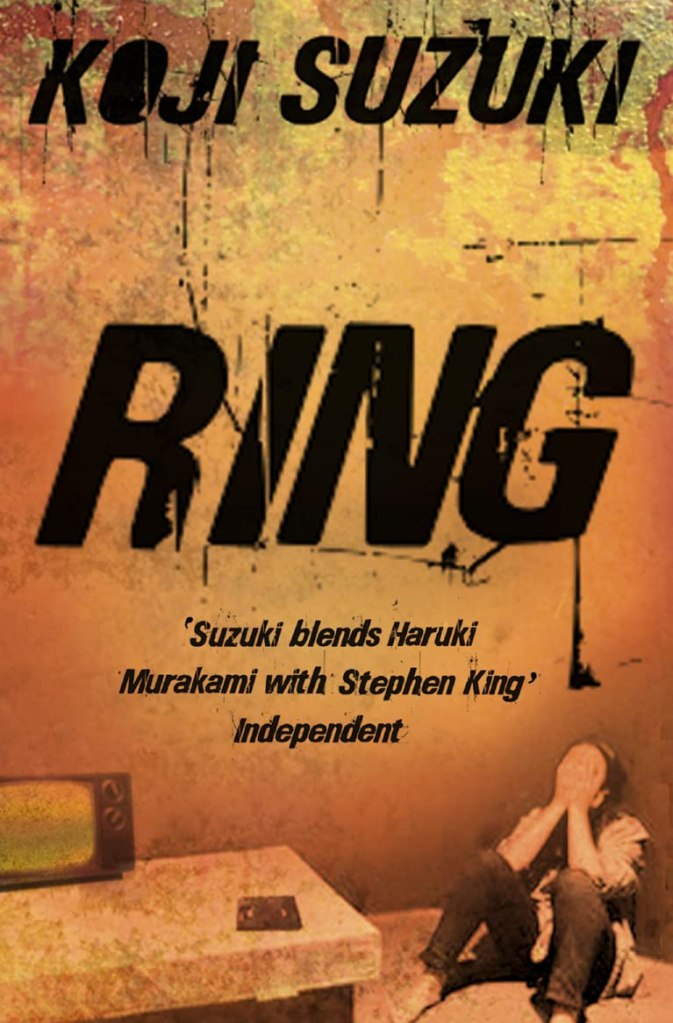
I didn’t realise until my boss told me that the original Japanese films are adapted from a trilogy of books by Koji Suzuki: Ring, Spiral, and Loop.
(Shout-out to Bryan!)
Now I’m curious…
What’s the most viral piece of content you’ve seen recently and why did it spread?
Let me know in the comments!
 Fourth Wall Breach