
I ❤️ the OG UK series set in Slough AND The Office US (or An American Workplace).
Because I’ve definitely rewatched the US version more times, I’ve decided to talk about the US version specifically. After all, it has become an annual rewatch.
Why do I love this version so much?
It reimagined and built on the original with more seasons and more character arcs. Just more to enjoy. Especially, from season two onward. I think the first season was too uncannily similar to the UK episodes, then Michael Scott stepped out of David Brent’s shadow with aplomb and applause.
The Office US is also one of those shows that manages to simultaneously be uncomfortable to watch while being a ‘comfort watch.’ Which sounds ironically and impossible.
Well, except for the ‘Scott’s Tots’ episode. I agree wholeheartedly with Jenna and Angela AKA The Office Ladies podcast. (Which was one of the first podcasts I started listening to back in lockdown… and love.) It is the most uncomfortable episode to watch… and perhaps one we fear is looming and want to skip.
But it’s this overall sitcom style of discomfort really appeals to us. (It’s not just me.)
There are awkward silences, inappropriate antics, cringe humour, questionable management decisions. And all of this makes you wonder:
“Who would ever work in this office?” And, “How the hell can you get any work done?”
We get it some of the character motivations:
Jim is there for Pam and vice-versa.
Dwight is there because… well, nowhere else will put up with his behaviour, despite his stellar sales record.
Also, he doesn’t actually need to work, does he? Isn’t he ridiculously wealthy with a fortune buried underneath Schrute Farm? Or am I thinking of Ron Swanson and his hidden gold? (Imagine a cross-over/ spin-off: Dwight ‘n Ron: Bears. Beets. Bacon and More Breakfast Food.)
But why haven’t the others handed in their notice long ago? It’s BAFFLING.
Well, maybe not Meredith… or Kevin… or Creed.
I think the Scranton-Stamford merger episode in season three is the one that has the most ‘realistic’ character reaction: when Tony quits due to Michael’s management style and being humiliated.
I know we shouldn’t be comparing the sitcom to an accurate representation of an office environment. It’s not like it’s a documentary…
Well, it’s not like a real office OR a real documentary.
But, we can see real people in the beloved characters. Some we may have worked with or heard about. Some we may have simply nightmared about.
Ultimately, we love the show which is also one of the most ridiculously quotable shows, including:
“I’m not superstitious, but I am a little stitious.”
“Who is Justice Beaver?” – “It’s a crime-fighting beaver.”
“It is your birthday.”- “It’s a statement of fact.”
“Would I rather be feared or loved? Easy. Both. I want people to be afraid of how much they love me.”
“Well, well, well. How the turntables…”
“Dwight, you ignorant slut.”
(That last one is my favourite.)
And I think The Office US is more than a sitcom…
It’s a bit of a masterclass in good-bad team dynamics.
Both the kind you want… and really don’t.
Let’s start with the obvious…
It’s Michael Scott!
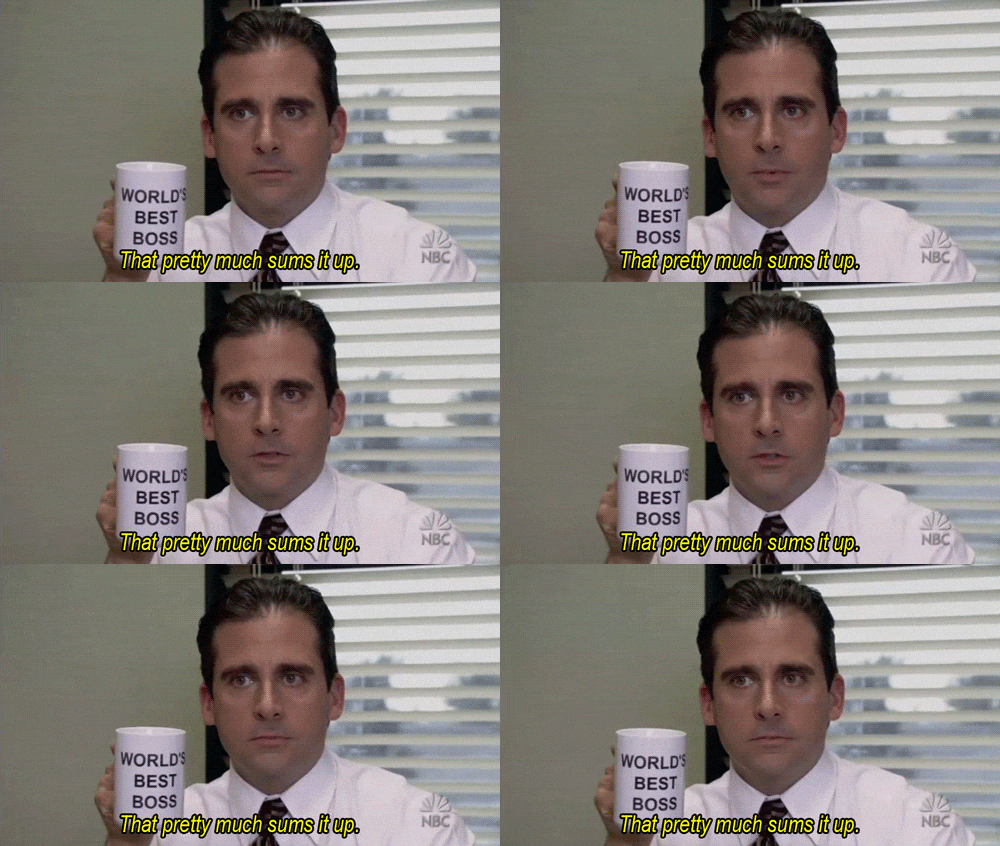
Michael is the perfect example of someone who cares deeply about his team. In fact, he cares too much.
He wants to be liked personally more than respected professionally. He prioritises fun over the 9 to 5. He prefers awkward humour over difficult conversations.
And while that creates some iconic character moments, it creates chaos, confusion, and regular crises for everyone around him.
In IRL, a team doesn’t just need energy to motivate them in their company. They also need direction, trust, and boundaries.
Now compare that to Jim and Pam…
Jim Halpert and Pam Beesly. “Jam or PB and J.” These two represent something very different to Michael.
They’re not loud, performative, or endanger their co-workers. (There are some occasions when they’ve tried to do a good thing and it’s blown up in their faces, but it’s impossible to please everyone, especially Angela and Oscar. Agreed?)
Arguably/ mostly, Jim and Pam:
- Support each other
- Communicate clearly
- Build trust over time
Again, I stressed these are “arguably/ mostly” points. 😅
The ‘Ross and Rachel of Dunder Mifflin/ Sabre ‘show that good team dynamics aren’t always about big gestures, but consistency.

Then, there’s Dwight K. Schrute…
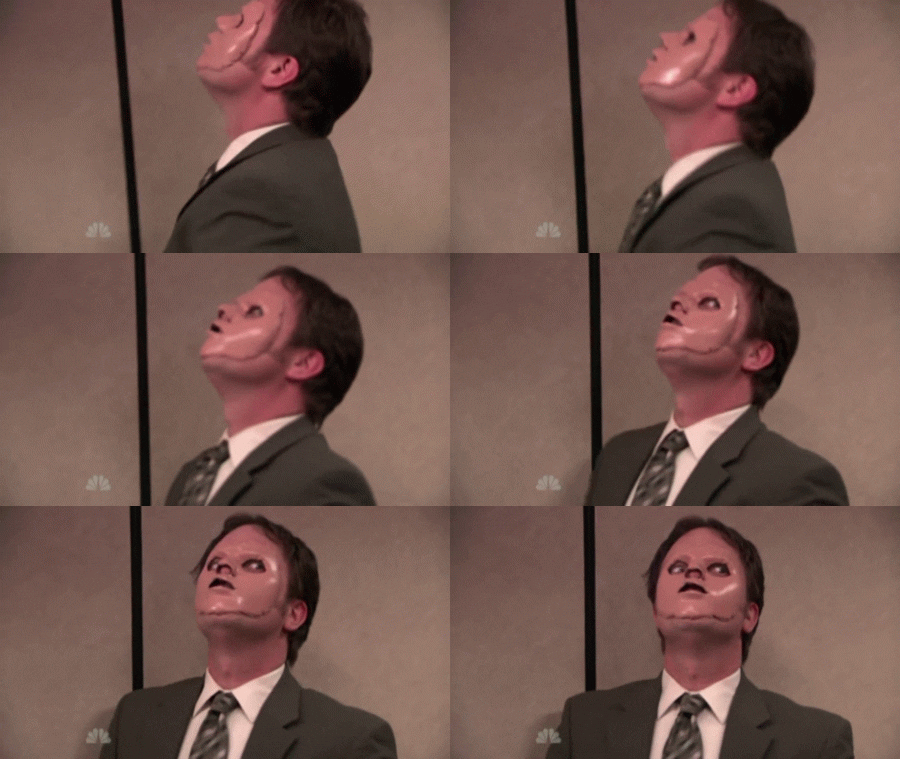
He’s arguably/ mostly competent, deeply committed, and slightly terrifying at times.
Again, “arguably/ mostly.”
Dwight is a great personification of a team/ team member with skills, but without empathy creates friction.
Yes, Dwight gets results as the hard-selling salesman, but his work ethic often alienates the people around him.
It’s not a great team dynamic when:
- Egos run amok
- There’s open hostility
- High performers operate in isolation
And let’s not forget some of the other Dunder Mifflinites in the Scanton branch…
- Stanley! He’s experienced, but disengaged and waiting for retirement.
- Phyllis! She’s warm, wizened, and just gets on with it, while being at the butt of many a Michael joke or Angela slight.
- Kelly! She’s delusional, over-ambitious, and is best suited to being the star of a ‘reality’ show, not set in an office.
- Angela! Very particular, disdainful and just needs a salary to support all of her cats, quite frankly.
- Oscar! He’s possibly the most intelligent, logical, and measured man in the room. Any room. Who needs to find another better room to be in.
- Creed! A criminal who has done a bit of everything?
- Meredith! Who just wants a cocktail?
- And Kevin! Just Kevin.
It’s a messy bunch, but it’s another real thing we can relate to on the screen, because no team is made up of one type of person.
So, what’s the marketing (and brand) takeaway?
Whether you’re building a team or marketing to one, you’re dealing with different personalities, motivations, and ways of working.
1. Not everyone is motivated by the same thing
Michael thinks everyone wants fun, but Stanley and Angela absolutely do not.
Some members of staff want autonomy, clarity, recognition, and stability.
Good brands (and good marketing) recognise the individual attributes in their teams… and clients or prospect can pick up on when this is recognised, too.
2. Trust is built in small, incremental moments
As mentioned earlier, Jim and Pam don’t build trust overnight. We know they’ve been colleagues for ages and the stage we see them at the start of the series is not the start of their love story.
They’ve been in love for aaaaaaaaaaaaages.
This team trust happens through:
- Small conversations… like visits to the reception desk
- Shared experiences… like in pointless Michael meetings and field trips to Dwight’s Dojo or the annual Dundies at the local Chili’s
- And showing up consistently when they’re feeling down about their personal lives
The same applies to brands:
Trust isn’t built in one campaign. It’s built over time.
3. Culture is what you say AND do
Michael says he cares about his team, but his actions often undermine that.
For example:
- When Michael lies about job safety to keep the branch downsizing news a secret from the rest of the office.
- When Michael prefers to declare the end-of-year budget surplus to get the 15% bonus, rather than spending the full surplus amount on new desk chairs or a working photocopier they need.
- When Michael locks everyone in the conference room during grief counselling following the death of the bird.
- When Michael makes the ‘Prison Mike’ video after learning one of the Stamford crew is a former convict.
- When Michael hits Meredith with his car. (I think this is the only example I really needed to use.)
Whereas, a great team:
- Addresses problems early
- Creates psychological safety
- Balances humour with accountability
All of which Michael fails at doing. Spectacularly.
Culture is what people experience daily, so it’s essential to ensure everyone is happy, supported, safe, and motivated.
4. The best teams feel human
What makes The Office US team so relatable is that they’re far from perfect. (No offence.)
The same goes for brands in that you don’t need to be overly slick or scripted when showing who you and your team is through rich, behind-the-scenes content.
In a nutshell: brands need to be recognisable and human.
And this is a bigger need, now more than ever with AI being used poorly in marketing, especially content.
Your personal, human brand story is entirely unique, because it’s your own story.
Leverage the crap out of it to stand out against the dry, ‘samey,’ overly-corporate competitors who lack a brand personality, have the same stock images, and soulless websites. (Offence intended.)
This will say a lot about your quality of customer service, value, and retention. Encouraging your audience to choose you and stay with you.
But —
Just don’t sing from the same Kelly Kapoor customer service singing sheet, maybe.

5. It’s got to be internal AND external
Your team dynamic isn’t just an internal culture thing. It can be key part of your brand experience/ external brand perception.
Customers and prospects will see it when:
- Your team shows up on a demo call
- They watch your BTS content
- They meet you at an event
- They interact with your support team
- They follow you on socials
So, if there’s a bad team dynamic, it’ll raise major red flags through:
- Disjointed communication (Michael vs. David Wallace or Jan Levinson, nee Gould)
- Awkward interactions (Remember when Michael took Pam, Daryl, and Oscar to the job fair?)
- Lack of alignment (Too many incidences to count)
- Tension (Whether it’s subtle or when Michael tries to make Oscar feel comfortable about being openly gay at work… by kissing him on the lips)
In reality, would you trust a brand where:
- Team members talk over each other on calls?
- Nobody seems aligned on messaging?
- The tone feels flat or disengaged?
Nope.
Didn’t think so.
Now, compare that to a team where there’s a natural, friendly flow in conversation and the energy feels positive and collaborative with people building on each other’s ideas.
Love. It.
That builds confidence in the brand and brands are more visible than ever with:
- ‘Day-in-the-life’ videos
- Team takeovers
- Event footage
All of this gives your audience a window into what it’s really like to work with these people.
And if what they see is supportive and human, then they’re far more likely to think, “Yep, I do want to work with these people. Damn right.”
While The Office US shows us what chaos looks like (and why it’s funny on screen), in real life, the way your team works together is an extremely powerful, visible, and unique part of your brand.
Without elaborate Dwight-led fire drills , unnecessary meetings to dissect Michael’s bizarre love life entanglements, and significantly fewer “That’s what she said” moments.
Maybe scratch that last one.
 Fourth Wall Breach