
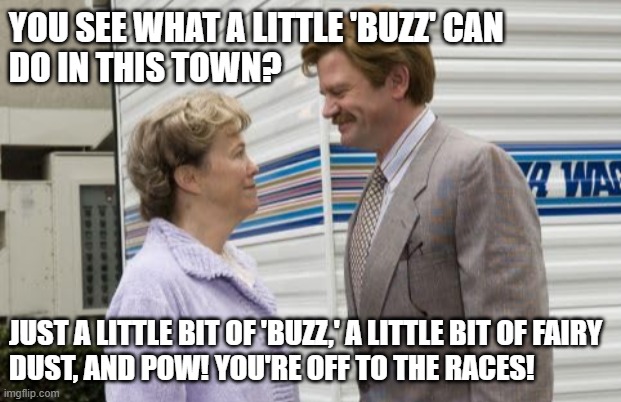
Corey Taft (Marilyn Hack’s Agent): “You see what a little ‘buzz’ can do in this town? Just a little bit of ‘buzz,’ little bit of fairy dust, and POW! You’re off to the races!
It sounds like a nice and friendly, low-stakes nudge, right? But, in the Studio System and Hollywood circles, “For your consideration…” means something very different and specific.
For every annual awards season, ‘For Your Consideration’ campaigns are launched to encourage Academy of Motion Picture Arts and Sciences (AMPAS) members to vote for their films during Oscar season through special screenings, Q&A events, ads, think-pieces, podcasts, interviews, industry events, and the like. The main goal?
Generating enough conversation that your film becomes impossible to ignore.
Back in 2006, Christopher Guest’s hilarious (and quite poignant in places, especially at the end) mockumentary takes that idea and poses a simple question:
What happens when everyone believes they’re about to become famous before they’ve achieved anything?
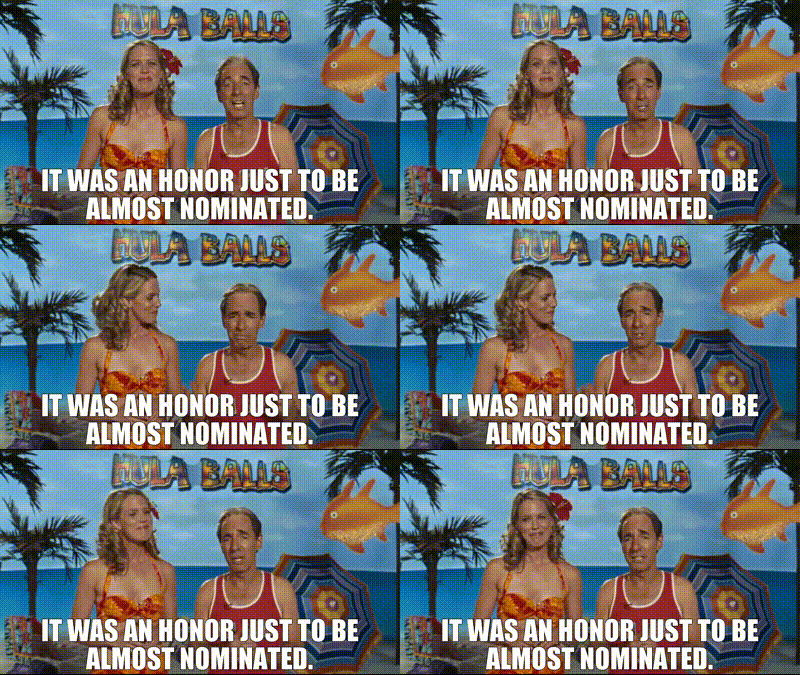
The answer is: Chaos!
From inflated egos and strained relationships, to producers making wildly different script decisions, agents getting involved, and journalists appearing on set. But, remember:
Nobody has been nominated. Nothing has actually happened yet. It’s only a rumour.
Yet, everything changes from this kind of ‘buzz.’
And this is where the marketing inspo comes buzzin’ on in…
Be careful! Buzzes can bombastically change behaviours…
(Preferably your customers’ behaviour, not yours!)
One of the funniest things about For Your Consideration is watching the cast quickly unravel and transform solely due to these media speculations.
I’m a big fan of Christopher Guest mockumentaries (Waiting for Guffman, Best in Show, A Mighty Wind), which are heavily inspired by the style of This Is Spinal Tap, directed by the late Rob Reiner. (RIP, Legend), which Guest starred in opposite some of his own regular pool of mockumentary actors, Michael McKean and Harry Shearer.
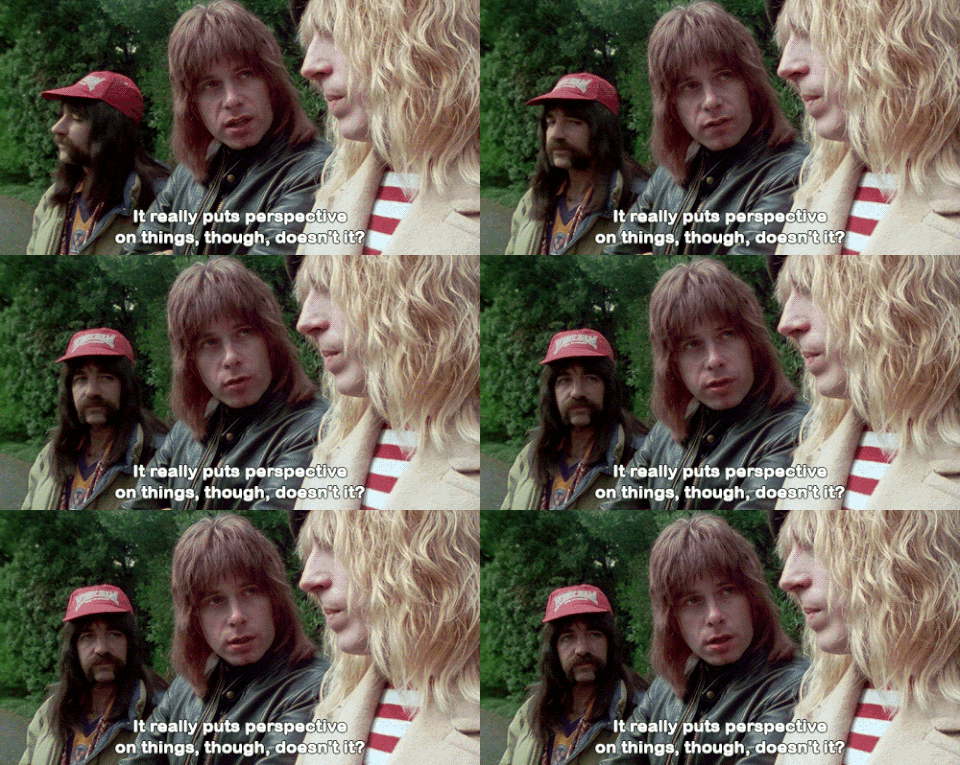
And I think this genre is a great medium for showing such comedic chaos.
I noted it down:
Around the 17-minute mark in For Your Consideration, Marilyn Hack (Catherine O’Hara) gets into conversation with the DP, Simon Whitset (Jim Paddock), at the Craft Services snack table, casually dropping into conversation that his girlfriend read an article on “FilmTattle.com” that “some bloke” got on set and thinks there’s an “Oscar nomination in the offing,” specifically for Marilyn’s performance.
That’s all it takes: one throwaway sentence, one off-the-cuff comment, and comedic chaos ensues!
In marketing, that buzz source (hopefully not chaotic) could spark in a similar way from an SEO-friendly blog post, as well as social posts across LinkedIn, TikTok, Instagram, etc., and on Reddit feeds.
But in the film, Marilyn, who was happily promoting the modest, independent film, Home for Purim, is treated like an awards contender by her eccentric-idiotic agent, Corey Taft (John Michael Higgins). When Marilyn first catches wind of the gossip, she dismisses it, but the curiosity quickly takes over.
This is shown in a brilliant scene I painstakingly and accurately transcribed as follows:
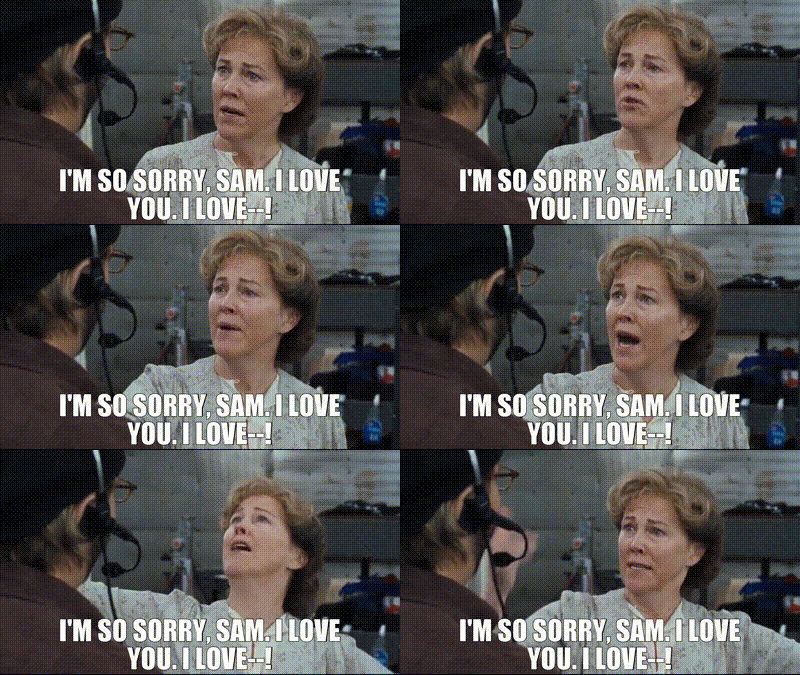
Marilyn: “And your name is…?”
Sam/Brian: “Sam.”
Marilyn: “No, it isn’t.”
Sam/Brian: “Mm-hmm.”
Marilyn: “No, it isn’t. That’s not what I’ve been calling you.”
Sam/Brian: “I know. You’ve been calling me “Brian.””
Marilyn: “Because your name IS Brian.”
Sam/Brian: “It’s Sam.”
Marilyn: “I’m so sorry, Sam. I love you! I LOVE–“ [Motions to Sam/Brian for a line/ name prompt]
Sam/Brian: “Sam.”
Marilyn: “”–SAM!” I LOVE “SAM!””
Sam/Brian: “Thank you.”
Marilyn: “Sorry, “Sam!” Um, you work the computers in the AD wagon, I’ve noticed.”
Sam/Brian: “Yes.”
Marilyn: “Yes. So, you know about these movie sites where they go to sets and talk about them on computers?”
Sam/Brian: “Sure.”
Marilyn: “Why am I telling you this? Well, it seems my name has been mentioned with reference to an Oscar nomination…”
Sam/Brian: “Wow.”
Marilyn: “Yeah.”
Sam/Brian: “That’s exciting.”
Marilyn: “Oh, big deal!”
Sam/Brian: “That’s exciting.”
Marilyn: “But, yeah, so… I just thought you might have known or seen such a thing?”
Sam/Brian: “Would you like me to do some research on that for ya?”
Marilyn: “If you WANT to?”
Sam/Brian: “Sure. I’ll check it out.” [They both start walking away down parallel sides of a set partition, so they can still hear, but no longer see each other]
Marilyn: “That’d be wonderful. I don’t want to bother you. Big deal! But, if you can? Thank you. [LOUDLY] Say your name again…”
Sam/Brian: “Sam.”
Marilyn: [LOUDLY] “SAM. Thank you, SAM.”
Sam/Brian: “My pleasure.”
Marilyn: [LOUDLY] “Thank you, SAM.”
Sam/Brian: “OK.”
Marilyn: “Thank you so much.”
Sam/Brian: “You’re welcome.”
Marilyn: [LOUDLY] “OSCAR! It will be in reference to. Oscar… [LOUDER] ARE YOU STILL THERE, SAM?”
Sam/Brian: “I’m here, I’ll look it up.”
Marilyn: “OK.”
Sam/Brian: “Oscar…”
Marilyn: “Wonderful.”
Sam/Brian: “Great.”
Marilyn: “If you can.”
Sam/Brian: “OK.”
Marilyn: “No big deal, who cares?”
It’s such a great back-and-forth with Catherine O’Hara (RIP, Legend) that just keeps going.
This scene also emphasises how that one throwaway sentence, that one off-the-cuff comment, makes deafening waves. And, before we know it, Marilyn is no longer acting coy or pretending not to care. She starts caring enormously, leading to plastic surgery to dramatically augment her appearance after a disastrous interview on Wake Up LA. Here, the news anchors ignore Marilyn and focus the conversation on Marilyn’s co-star, Victor Allan Miller (Harry Shearer), and announce that he should be Oscar-nommed, too!
Dun-dun-duuuuuuuuuuuuunnnnnnnn…
But it’s not just Marilyn and Victor garnering buzz and attention: Callie Webb (Parker Posey), who plays their daughter Rachel in the film, is also tipped to pip them to the post as another worthy Oscar nominee in an article featured in Variety.
That’s three big noms and three big ego trips.
Firstly, Parker Posey is amazing in everything she’s in, IRL:
From the scary-sassy cheerleader in Dazed and Confused and wild librarian in Party Girl, to Stab 3‘s Gale Weather’s character in Scream 3 and the loopy, Lorazepam-popping Victoria Ratliff with the Southern drawl in The White Lotus Season 3.
Plus, all of Christopher Guest’s mockumentaries.
So. Good.

After the third nom-nouncement, Callie becomes increasingly consumed by publicity, breaks up with co-star and partner off-screen, Brian Chubb (Christopher Moynihan), and even appears on a shock-jock radio show, Morning Wood (short for ‘Hollywood’), where all they want to know is if she’s nude in any scenes.
The answer is no… and they’re disappointed.
The marketing lesson: you don’t always control the conversation around your brand.
The Buzz Effect in marketing and movies..
In marketing…
The buzz creates its own momentum and media amplifies this, whether that be with social media posts, online and/or offline articles, podcast interviews, press releases, etc.
In For Your Consideration…
The buzz has a satirical impact on the not-yet-completed film, as new choices are made, scripts are revised, Callie’s/ Rachel’s lesbian relationship is more abstract/ non-existent, the film’s title is changed from Home for Purim to Home for Thanksgiving to “tone down the Jewish-ness.”
The attention the film is getting sends the studio head (Ricky Gervais) into a frenzy, fearing the film’s narrative won’t appeal to or reach a wider audience.
But, in marketing…
Rebranding like this for broader appeal can dilute what makes the messaging/ campaign offering so distinctive in the first place. For example, if you’re trying to market an edtech product to primary, secondary, FE, HE, MATs, international schools, and parents all at once… eventually nobody feels spoken to, so your message falls flat.
Pick one, or at least one audience data set to focus on per ad and dedicated landing page.
Go granular or go home!
Back to For Your Consideration…
It’s the change in the conversation around the film that’s just a little bit fascinating, because we often assume attention follows success.
In reality, success often follows attention because more people are noticing it, not that it’s necessarily a superior product. (Not intending to be a buzz-effect-kill!)
Overall, the ‘buzz’ has an interesting psychological effect:
It acts like it’s giving permission to the mainstream audience and, if enough people appear interested in your product or service, then a greater number of your target audience will notice it and become curious, too.
And nobody likes MIMO or FOMO feelings…
It’s why:
- Spotify Wrapped posts are all over LinkedIn every December. (I keep using this as an example because it’s such a great example for so many marketing contexts, so… it’s likely to pop up again.)
- People queue overnight for product launches.
- Everyone suddenly wants to read the Booker Prize winner.
These are buzzes!
They create a feeling marketers feel like they’re forever trying to harness:
The feeling that makes you think, “Maybe I should pay attention to this…”
It moves us out of the MIMO-FOMO Fear Zone and deeper into Curiosity Country. As humans, we naturally investigate what other humans appear excited about and it’s why successful campaigns create both awareness and momentum.
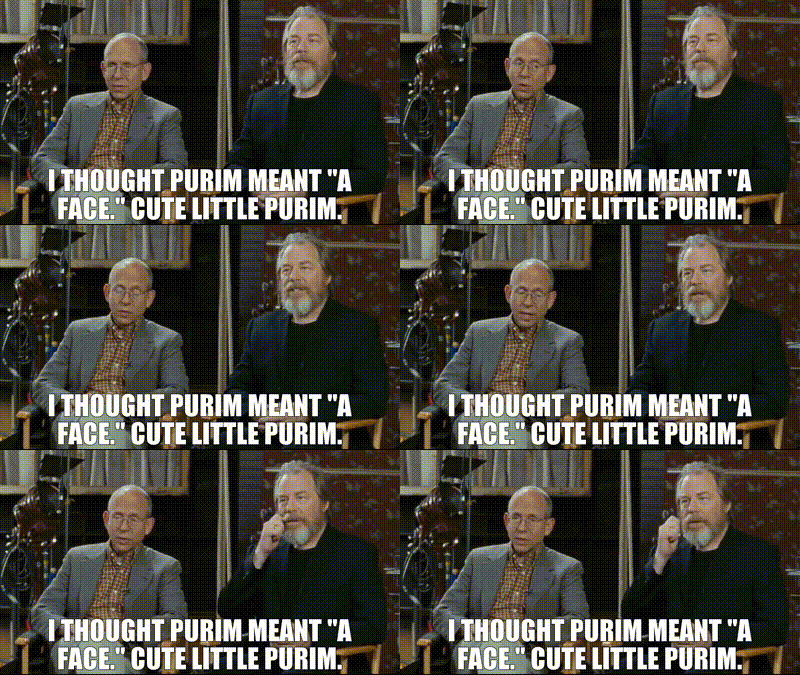
Getting on the Oscar campaign trail…
Studios don’t wait until Oscar nominations are announced before they begin marketing. They’d be foolish to wait and compete with other studios and film releases vying for the same attention, the same award, the same prestige.
But, you don’t want to peak too early and get forgotten in the shadow of somebody’s else’s buzz closer to the voting polls.
Saying that, studios still opt to get in quick and start campaigning months beforehand with the screenings, ads, and podcasts, etc. Every campaign activity/ marketing tactic gradually builds the same message:
“This film is great, it matters, it’s Oscar-worthy, bitches.”
It’s similar to how non-film product launches work:
- Apple doesn’t just announce a new iPhone in a video spot… and that’s it. No, there are months of rumours, leaks, speculation, and developer conversations to quietly build anticipation long before Tim Cook steps onto the stage.
- Taylor Swift has turned album launches into global detective stories, with Easter eggs, hidden clues and fan theories keeping conversations alive for weeks.
Recognition is a powerful marketing ‘shortcut’…
Some people might say, “Awards don’t matter.” Like when Callie says she doesn’t act for trophies.
BUT–
We know she’s trying to play it cool to not build her hopes up.
I wouldn’t say awards don’t entirely matter, because they do look good; recognition and accolades do change public perception.
Think about the last time you saw:
- A book described as “The Sunday Times Bestseller.”
- A restaurant awarded a Michelin Star.
- An edtech platform shortlisted for and/or winning a Bett Award.
The product hasn’t just (Poof!) magically improved overnight. However, the symbol or badge instantly communicates something really robust:
It reduces uncertainty and acts as a shortcut for trust signals and social proof in the eyes of an audience that hasn’t heard of your brand, nor has it had first-hand experience sampling your product/ service.
It’s not all about egos, like Marilyn’s, Victor’s, or Callie’s…
Customers rarely have time to research every option in detail about brands/ products/ services they need, so social proof, recommendations, award badges, and recognition do matter for convincing prospects to share their contact details and sign up to a demo or a free trial.
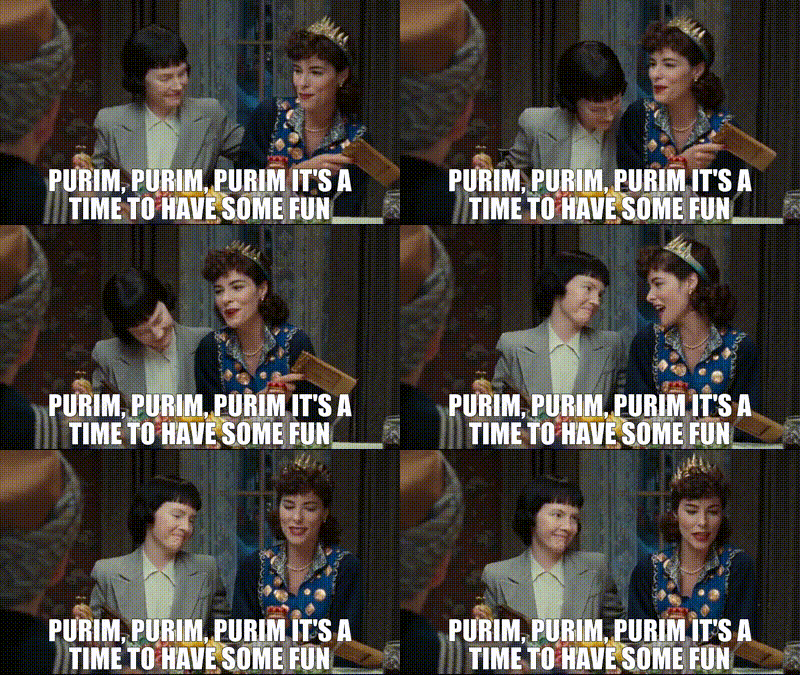
Gotta earn that buzzzzzzzzzzzzzzz…
FYI:
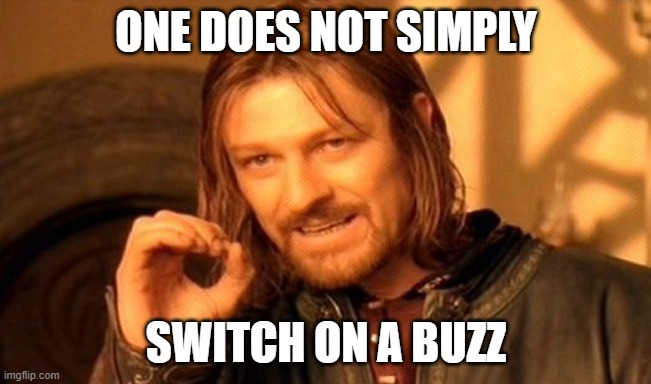
Nailed it, Boromir.
Yep, a buzz doesn’t work like that…
If you’re publishing LinkedIn posts, sending out an email series, hosting a webinar, and issuing a press release during Launch Week, only to be surprised by low engagement and not-so-golden silence by the end of that week?
Well…
Again, a buzz doesn’t work like that.
You might be conflating buzzes with zaps. (To be clear: buzzes aren’t zaps.) A buzz behaves much more like the For Your Consideration Oscar noms: it builds up gradually, and isn’t about instant gratification or results, like a zap suggests.
A buzz builds through conversation, that leads to a recommendation, that turns into a customer story, and influences a podcast episode, before adapting the content into a helpful webinar, which you can share in detail as a thoughtful, long-form LinkedIn post or article, and before you know it, you’re leading a conference talk about it with a panel of revered peers, LIVE in front of your target audience.
All of these combine to create momentum, which is the art of the long-game buzz.
So, how can brands build a genuine, big buzz?
Not by shouting louder…
Instead, give your audience reasons to keep talking, which can be:
- Revealing your launch in chapters rather than all at once.
- Sharing behind-the-scenes development stories months before release.
- Turning customers into advocates through case studies and community events.
- Inviting people to influence your roadmap ahead of the product launches.
- Creating anticipation with teaser content rather than feature dumps.
- Celebrating milestones publicly so customers feel part of the journey.
- Showing your team of humans behind the product, not just the product itself.
The best momentum-built buzzes feel like marketing-free recommendations that are word-of-mouth, and are catching fire.
What this could look like in edtech…
Imagine you’re launching a new assessment platform:
The best way to do it is to announce it with a feature list, talking about all the bells ‘n whistles… correct?
FALSE. (Thanks, Dwight.)
Try this instead:
- Spend at least 6 weeks talking about pain-points and challenges first.
- Interview teachers.
- Publish classroom research.
- Share prototype sketches.
- Invite schools to test early versions.
- Film short conversations with the developers explaining why they built certain features.
- Celebrate the teachers shaping the platform.
Then, by Launch Day, it’s not a sudden product intro/ pull-back-the-curtain/ reveal zap!
Now, you’re concluding a story your audience has been following through your long-game, buzz-building strategy.
There’s an important caveat…
A buzz without substance fades quickly.
This is because while you can manufacture attention, you can’t manufacture advocacy.
Eventually, your product has to justify the excitement, which filmmaker Christopher Guest understood. Instead of merely poking fun at Hollywood in the film, he’s poking fun at human nature, spotlighting the fact we all want a li’l bit o’ recognition, am I right?
The mistake brands can make that’s satirised in For Your Consideration is: everyone starts marketing themselves instead of the film. They pivot from loving the script and the story of Home for Purim to loving their own careers, publicity, image, and potential awards they could win.
With brands…
When they stop talking about the customer, their problems, and the solution to their problems, i.e. your product or service… and start talking about themselves, their awards, growth, funding, features, etc.
Suddenly, all content and messaging sounds very one-sided, superficial, and too press-release-y.
Ultimately, attention gets people looking, but the buzz keeps people talking, so you need to continue these conversations the right way…
And keep the buzz buzzin’!
It’s ‘WXTMAY’ Question Time…
I’m going to launch straight into the Q’s:
- Has an award, shortlist, or recommendation ever changed your perception of a product or brand?
- What’s the best example of a company building momentum before launch that you’ve seen?
- Which brands do you think are brilliant at creating a genuine buzz, rather than simply making noise?
 Fourth Wall Breach
Leave a comment