
The Pleasantville world (the show within the film, I mean) is like a nostalgic love letter to classic, black-and-white 1950s American sitcoms.
Which tend to be extremely unfathomable or incredibly problematic!
With perfect lawns, perfect families, and painfully perfect smiles. Where nobody swears, nobody has sex… and nobody even knows what rain is. (Imagine!)
And everything exists blissfully in a bleached monochromatic hue. (Literally.)
Then, what happens?
Two 90s teenagers, David and Jennifer (played by Tobey Maguire and Reese Witherspoon, respectively), get transported into this idyllic land as the show’s characters “Bud” and “Mary Sue,” throwing everything that’s “pleasant” completely off-kilter.
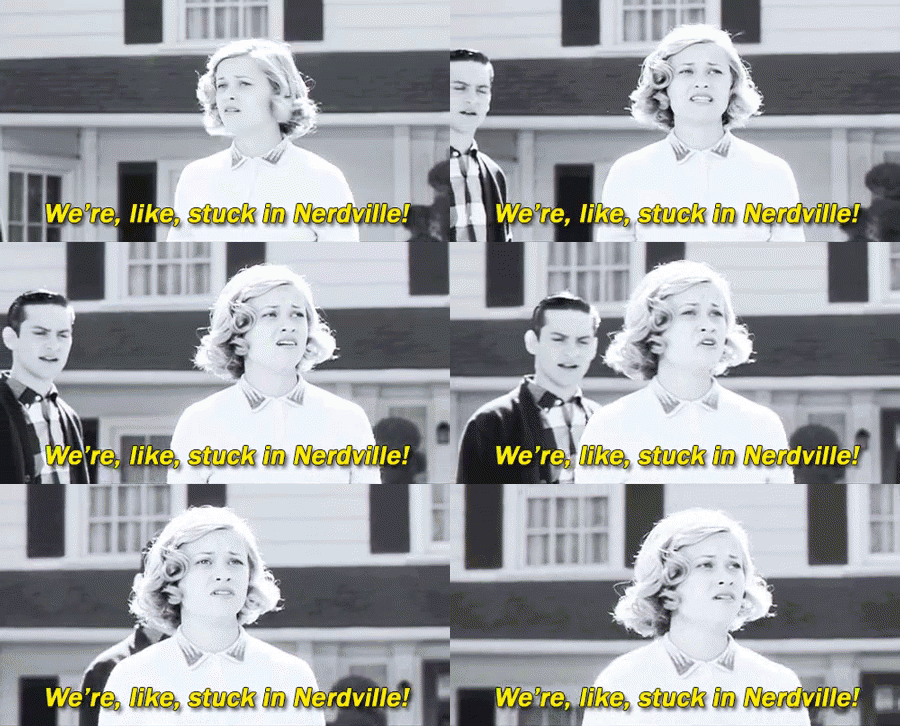
David: They’re happy like this.
Jennifer: No, David. Nobody’s happy in a poodle skirt and a sweater set.
(Got to love 90s-angsty-teen Reese in this.)
Nevertheless, something fascinating happens over the course of their unexpected trip/ picket-fence invasion:
Colour starts appearing and with it comes change, curiosity, and emotion.
I’m just going to say it:
Pleasantville might be one of the smartest films ever made about nostalgia vs. modern-day thinking.
It has a lot to teach us about using it as a marketing strategy, too…
First, let’s talk about ‘why’ nostalgia works so well…
One of the reasons David loves Pleasantville is because he already knows exactly what’s going to happen.
In ‘present day/real world,’ David avidly watches marathons of this beloved show, able to recite lines, verbatim.
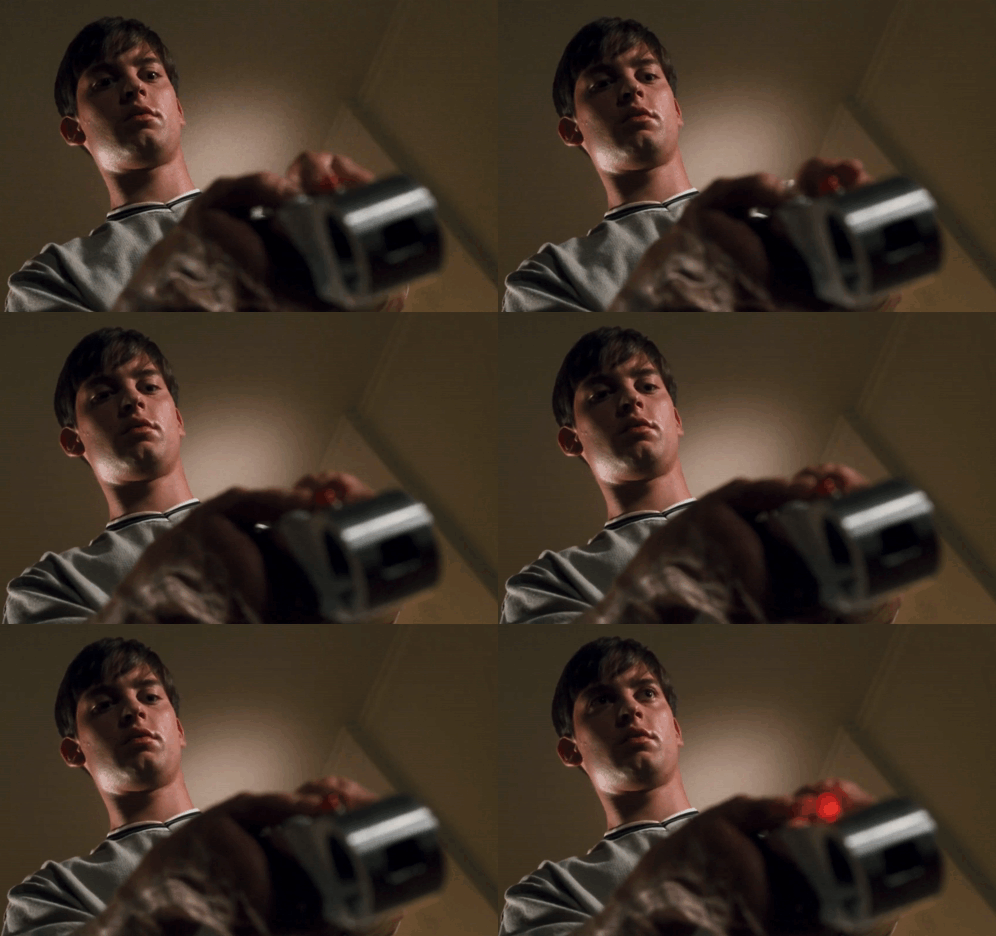
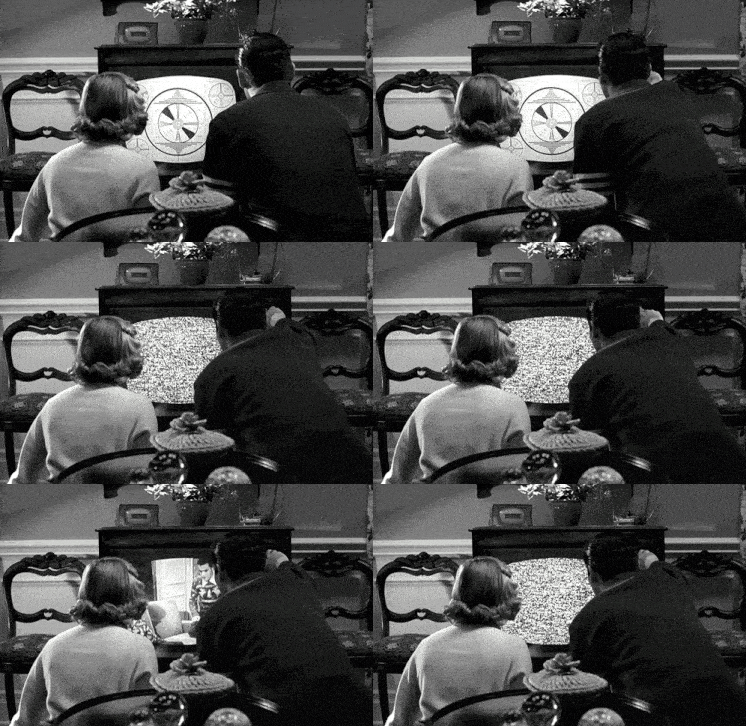
TV Repairman (Don Knotts): Hey, who did Muffin take to the masquerade ball when her date came down with the measles?
David: Her father.
TV Repairman: That’s right! And how’d she dress him?
David: As ‘Prince Charming.’
TV Repairman: Nice! Remember the one where Bud lost his cousin when he was supposed to be watching him?
David: Yep.
TV Repairman: What department store did they go to?
David: MacIntyre’s.
TV Repairman: McGinty’s.
David: No, MacIntyre’s! Remember? [sings the MacIntyre’s jingle] “For the very best in men’s attire, head right down to MacIntyre’s.”
TV Repairman: That’s right.
Every episode follows the same pattern and, of course, every character behaves in the same, predictable manner.
Nothing changes, there are no surprises, and TBH, that’s a significant part of why nostalgia marketing can work:
It makes us feel comfortable and connected.
Like when we see retro brand logos and hear old TV jingles. This is because we’re recognising something and remembering how it used to make us feel. It’s why brands like LEGO, Coca-Cola, Nintendo, Cadbury, and Disney continue to revisit their history:
This familiarity creates trust.
(It’s not about being stuck in the past.)
The B+W world is legacy branding, which can be a ‘bad’ thing…
At the start of the film, the town of Pleasantville exists in a permanent loop where every day is essentially the same, as if everyone is following the same script, and nobody questions anything.
When I say, “exists in a permanent loop,” I mean geographically, too:
Teacher: Last week, class, we discussed the geography of Main Street. This week we’re going to be talking about Elm Street. Now can anyone tell me the difference between Main Street and Elm Street? Tommy?
Tommy: It’s not as long?
Teacher: That’s right, Tommy. It’s not as long. Also, it only has houses. So, the geography of Main Street is different than the geography of Elm Street. Mary Sue?
Jennifer/Mary Sue: Yeah…what’s outside of Pleasantville?
Teacher: I don’t understand.
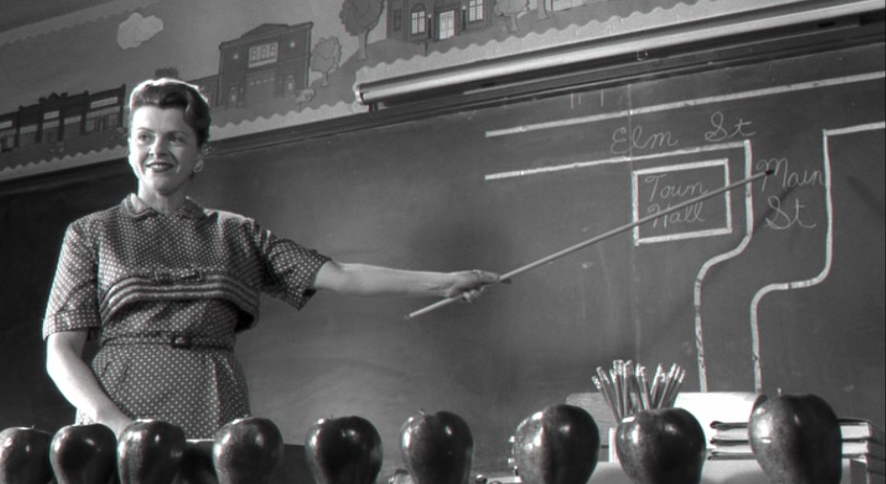
This can be interpreted as a dangerous representation of nostalgia…
Because some brands can fall into the trap of being too obsessed with heritage and tradition, with a “it’s how we’ve always done it” mindset.
David IRL Mum (Jane Kaczmarek): When your father was here, I used to think, “This was it. This is the way it was always going to be. I had the right house. I had the right car. I had the right life.”
David: There is no right house. There is no right car.
It’s when brands fall back on legacy branding or products/ platform/ systems that are limited and rigid for audience use, in need of updating. That’s a tell-tale sign of when they need to adapt, not become stagnant.
Kind of like Blockbuster, Kodak, and Toys ‘R Us (before its revival).
These weren’t bad brands. In fact, they were beloved, Pleasantville-y brands. (As a film fan and former employee, I loved Blockbuster.) However, familiarity alone isn’t enough to keep a brand thriving if the product or business model is no longer relevant.
Customers and tech evolve… and brands have to, too.
(We don’t stick with Version 1.0 and that’s all folks.)
Then, Technicolor arrives…
…And slowly spreads throughout the town.
At first, it’s shocking and people don’t understand it.
Some fear it.
Some actively try to stop it.
BUT —
Eventually it becomes impossible to remain in ignorant black-and-white.
The more people experience new ideas and new emotions, the more colour appears… and they themselves become Technicolored.
Boom!
Innovation has the same effect:
From smartphones and streaming services to social media and AI. Initially, many people were sceptical about how effective, easy-to-use, or successful these would become in comparison with the ‘old way’ of calling people on the phone, watching terrestrial TV or using physical media only, and being creative online.
Now, they’re tools we use in our everyday lives.
But, any change often feels uncomfortable before it feels like ‘the norm.’
That leads us to the film’s ‘Anti-Colour Movement.’
Some residents (mostly the pale male stale husbands) who see it as a threat draft new rules and restrictions in an effort to preserve “the way things used to be,” led by Pleasantville’s Chamber of Commerce and Mayor Big Bob ( J. T. Walsh).
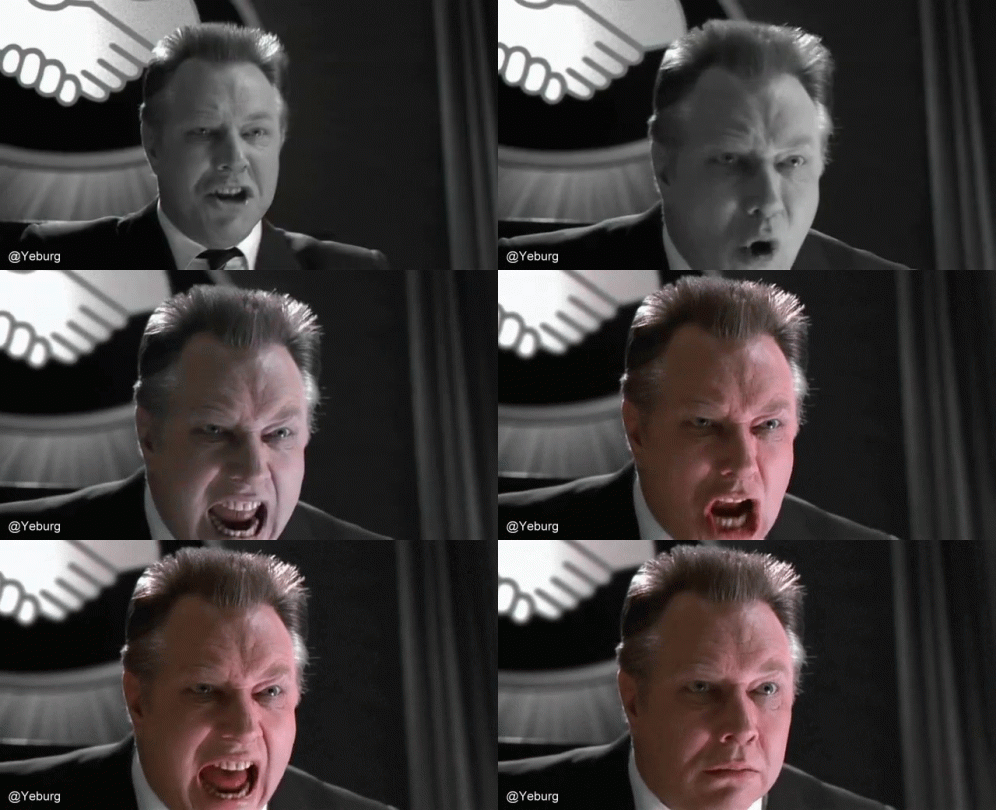
Big Bob: You’re out of order!
David: Why am I out of order?
Big Bob: Because I’m not gonna let you turn this courtroom into a circus!
David: Well, I don’t think it’s a circus, and I don’t think they do, either.
Big Bob: This behaviour must stop at once.
David: But see? That’s just the point! It can’t stop at once, because it’s in you, and you can’t stop something that’s inside you.
See? Major innovations faces resistance.
We’ve also seen it with AI and even with remote working and electric vehicles. We’ve seen it in education whenever schools introduce new technologies, systems, and approaches. Sometimes there are concerns. Some are valid and some aren’t.
But —
Resistance isn’t necessarily evidence that something is wrong or a concern, just that something is different.
Nostalgia works best when it isn’t…
…Trying to recreate the past.
Even though I’ve stated the potential danger of nostalgia, this film doesn’t argue that the old world is bad or suggest that the new world is perfect.
Both versions learn from each other.
Just like:
- Top Gun: Maverick: It respected the original, but it was still flying solo.
- Ghostbusters: Afterlife: It honoured the spirits of the past while introducing a new generation of Busters.
- Barbie: It used nostalgia as a way in, then broke the mould with a thoroughly modern story.
- Stranger Things: It borrows heavily from a bunch of 80s culture while flipping it on its head to bring us something unique.
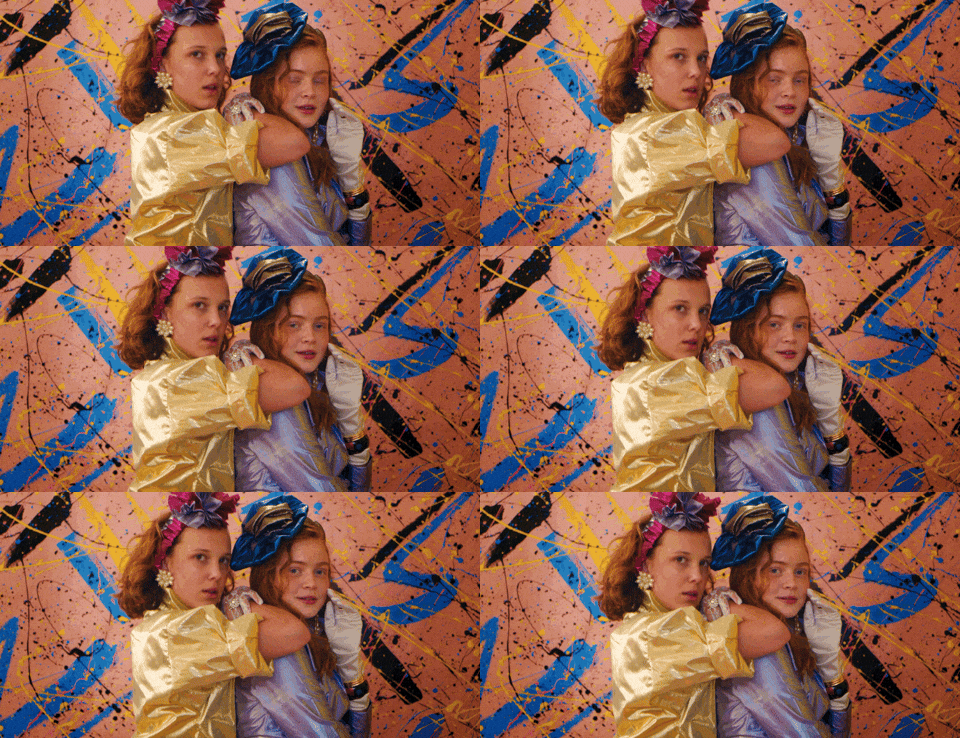
Nostalgia isn’t really about the past. It’s an emotional experience.
That’s why the ideal time for brands to incorporate nostalgia and leverage this in their marketing is during periods of uncertainty for their target audience.
When the sector or world feels complicated, familiar things become more appealing, motivating people to gravitate toward things that remind them of their childhood, positive memories, and shared cultural moments.
It’s an incredibly powerful marketing strategy when used in a responsible way.
And one of the most memorable moments is…
…When colour begins appearing in places where people start expressing themselves authentically.
From pops of colour, like the pink bubble gum and umbrella to the real art that Bill (Jeff Daniels) paints in the diner.
This happens when the characters in the new and Technicolored Pleasantville stop following the script and start breaking it.
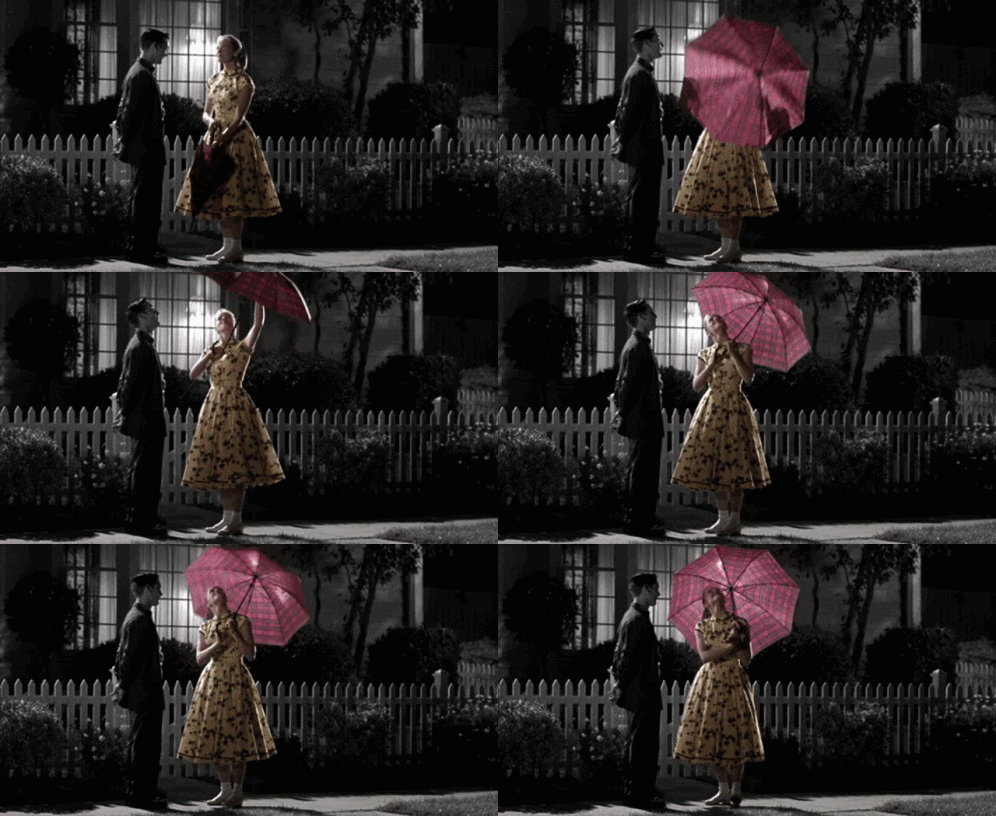
The lesson:
People don’t really miss the past, per se. It’s really about how the past made them feel… and a smart brand understands the distinction.
So, how can brands get their nostalgia on?
(1) Bring back old favourites (with a modern twist)
Let your audience rediscover the products they grew up with, with:
- Limited-edition retro packaging
- Archive product re-releases
- “Back-by-popular-demand” collections
- Vintage logo product ranges
- Classic TV advert recreations
Here’s how other brands have done it:
- Coca-Cola’s retro bottles
- McDonald’s old favourites back on the menu
- LEGO’s reissued classic playsets
- Walkers’ discontinued flavour revival
(2) Spotlight customer journeys (instead of rolling out a ‘Version 6.2’)
In education/ edtech, this could be:
- ‘Then vs. Now’ classroom transformations
- Schools “celebrating 25 years of innovation”
- Throwback photos from classes, assemblies, sports days, drama productions, etc.
- Alumni success stories
Here’s a quick campaign idea:
Theme: ‘Where it all began’
Invite teachers to recreate their first staff photo or first classroom, then show how far they’ve come.
(3) Celebrate customer history (not just always looking forward)
Why not commemorate and give shout-outs to:
- First customers
- Long-term partnerships
- Product milestones
- Archive case studies and testimonials
- Team anniversaries
- Plus, office throwback photos (you’ve know where they’re saved on your phone!)
Here’s a quick campaign idea:
Theme: ’20 years together and counting’
Show how both your company and your customers have grown together since you launched.
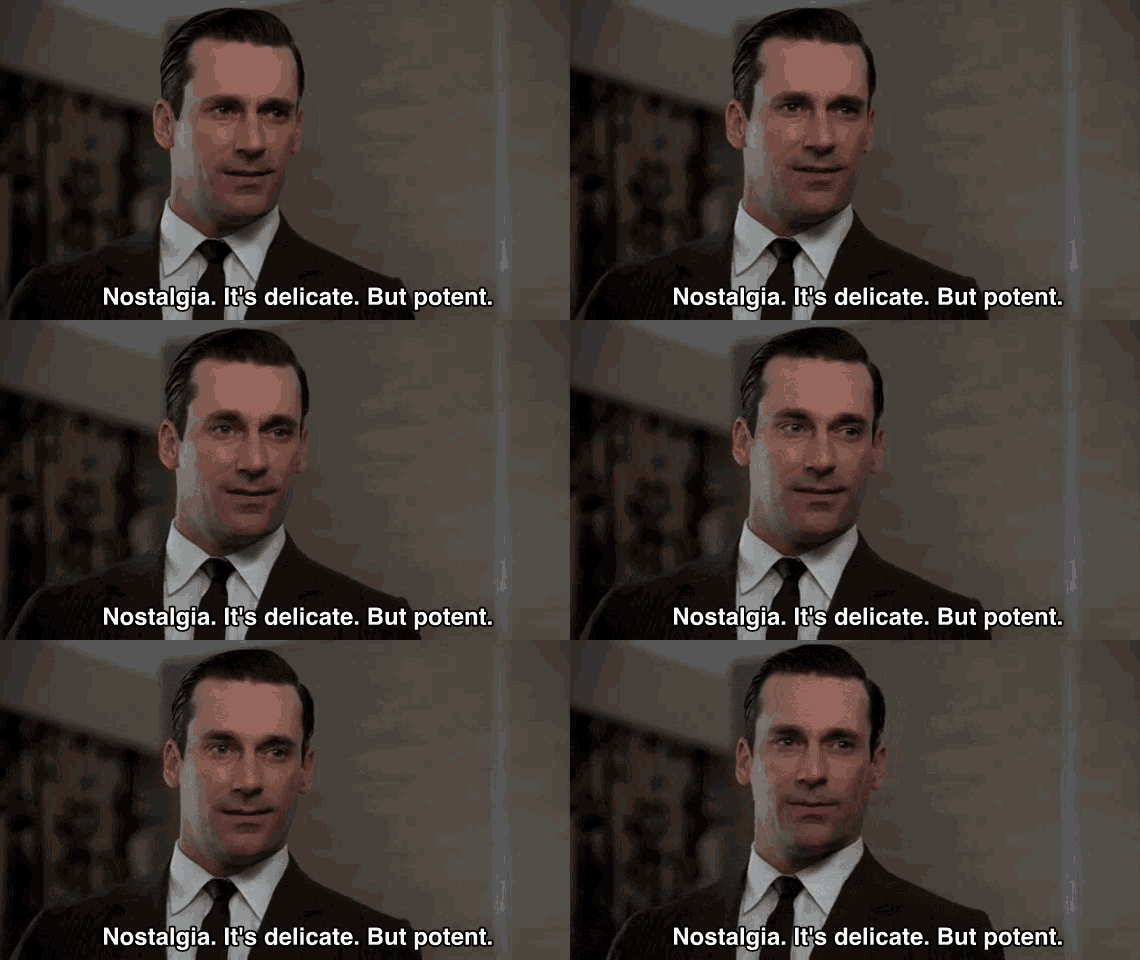
Thanks, Don Draper.
What a wordsmith…
It’s the ‘Pleasantville’ Principle…
Overall, the film reminds us that nostalgia isn’t about living in the past, oh, no…
The brand and marketing inspo that we can read into the narrative prompts us to ask:
- What memories do our customers already have?
- What emotions are attached to those memories?
- How can we honour them without simply repeating them?
- What new chapter of their journey can we invite customers into?
Effective nostalgia marketing doesn’t ask people to go backwards, not at all…
Nostalgia marketing gives them a familiar place to begin before leading them somewhere new.
Add colour to your customers’ past, the Pleasantville way.
Quick question…
What’s the best example of nostalgia marketing you’ve seen recently… and which brand do you think balances heritage and innovation particularly well?
Let me know in the comments, pleaseandthankyou!
I can’t write about ‘Pleasantville’ and NOT mention…
…How the themes of the film address racism, bigotry, and inclusivity in a creative and abstract cinematic format.
We see this in the aggressive and intimidating reactions from those who are still in B+W to those who are now in colour. The ‘Technicolored’ are perceived as minorities and a disruptive element to the natural order of things.
When David and Jennifer’s Pleasantville mother, Betty (Joan Allen), is in full colour and gets cornered in an alley by a group of B+W teenage boys, they threaten violence and sexual assault because she looks different to them.
This adds a deeper layer and serious tone to the message in the film.
We also see this when David/ Bud helps Betty to ‘cover up’ her new complexion with B+W makeup to fit in and hide her true colours for fear of persecution.
I think it’s an interesting way to show this.
What do you think?


Leave a comment