
Mike Flanagan’s limited series is one of the cleverest examples of interconnected storytelling I’ve ever seen.
Yep, I said it.
I believe it, too. It’s soooooooooooooooo well done.
Flanagan adapts and modernises not just one, two, three, four, or five of Edgar Allan Poe’s stories and poems… but many.
The Masque of the Red Death, The Tell-Tale Heart, The Black Cat, The Pit and the Pendulum, Annabel Lee, Lenore, Tamerlane, The Narrative of Arthur Gordon Pym of Nantucket, The Raven.
(Did you get that Carla Gugino’s character name “Verna” is an anagram of “Raven”?)
All of these references are perfectly rolled into one giant narrative ecosystem.
And every episode feels connected to an overarching narrative as the characters overlap and themes echo each other with tiny details planted early on, foreshadowing key conflicts and resolutions.
Hey, brands! Take a leaf out of Poe’s collective works…
Like what Mike Flanagan did with his adaptation of The Fall of the House of Usher, instead of operating isolation, brands can build their own ecosystems.
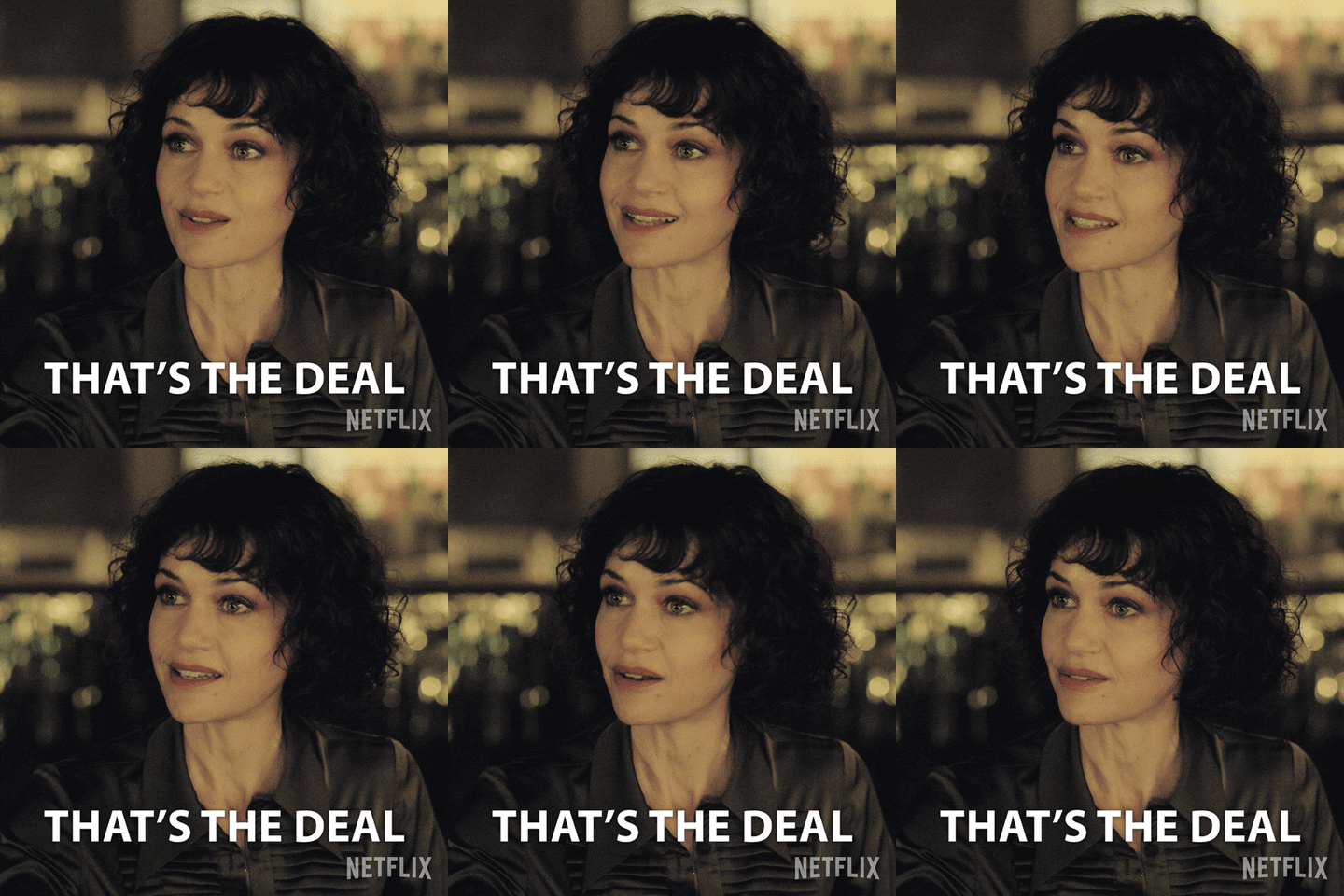
The Usher Empire Is Built on Perception…
Fortunato doesn’t dominate the pharmaceutical market because it solely sells medication. Ridiculously addictive medication.
Well, not entirely.
It dominates because the Ushers control the Fortunato narrative in the media, its influence, culture, and politics.
The Usher family is pretty much the Roy family from Succession, except the Usher bloodline has a curse, due to brother Roderick and sister Madeline sealing the deadliest deal with the Devil/ Raven, AKA Verna.
Speaking of perception and Roderick…
Remember Roderick’s monologue to Dupin about lemons?
Yes. Lemons.
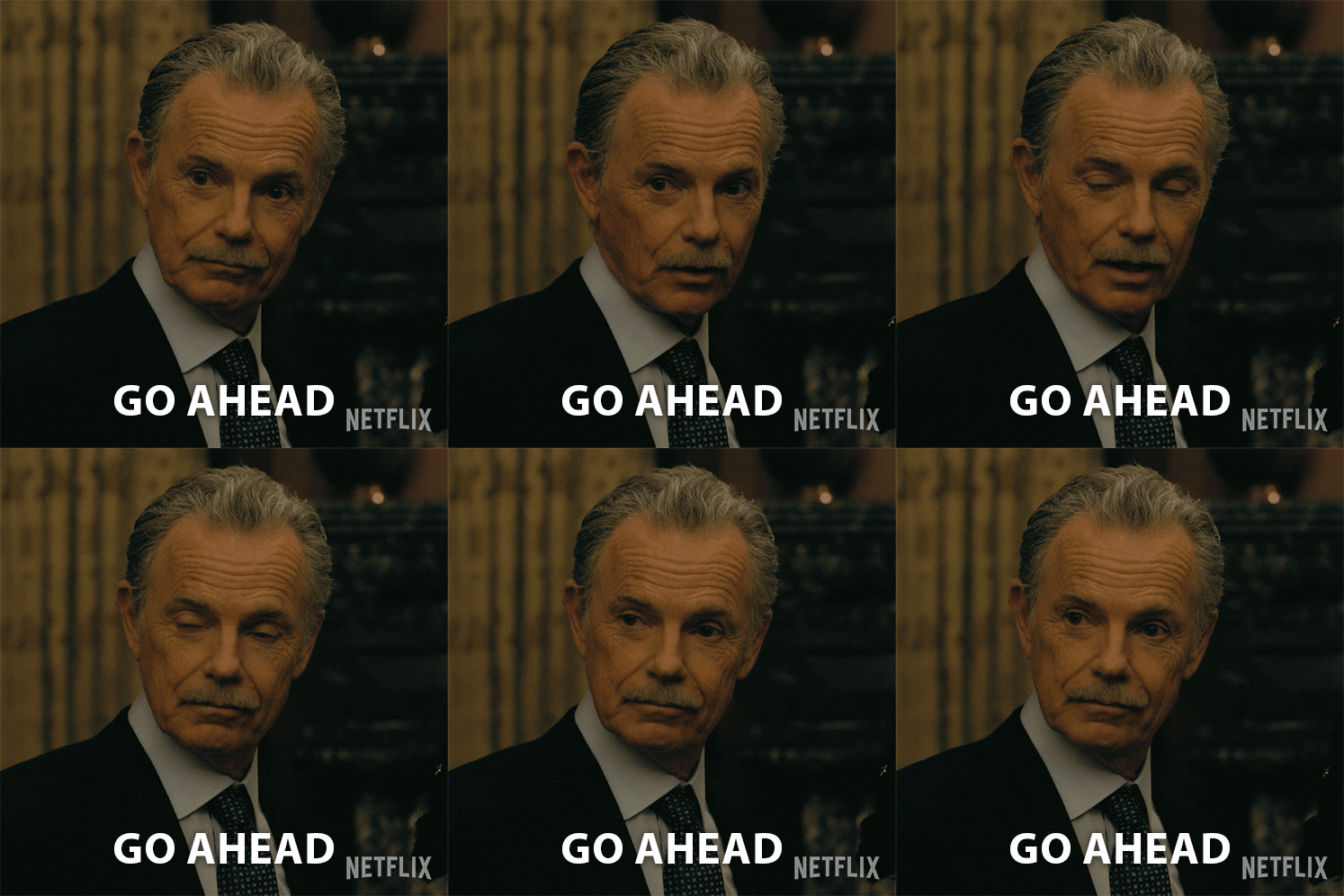
The Entire Lemon Monologue
The following is a dark masterclass in cultural marketing that must be appreciated in full:
Roderick Usher: Death was something new for my children. They really hadn’t faced it. But like with all other things, Ushers adapt quickly. One thing I tried to teach them, the art of the pivot. When life hands you lemons…
C. Auguste Dupin: Make lemonade?
Roderick Usher: No. First you roll out a multi-media campaign to convince people lemons are incredibly scarce, which only works if you stockpile lemons, control the supply, then a media blitz.
Lemon is the only way to say “I love you,” the must-have accessory for engagements or anniversaries. Roses are out, lemons are in. Billboards that say she won’t have sex with you unless you got lemons.
You cut DeBeers in on it. Limited edition lemon bracelets, yellow diamonds called lemon drops.
You get Apple to call their new operating system OS-Lemón. A little accent over the “o.”
You charge 40% more for organic lemons, 50% more for conflict-free lemons. You pack the Capitol with lemon lobbyists, you get a Kardashian to suck a lemon wedge in a leaked sex tape. Timothée Chalamet wears lemon shoes at Cannes.
Get a hashtag campaign. Something isn’t “cool” or “tight” or “awesome,” no, it’s “lemon.” “Did you see that movie?” “Did you go to that concert? It was effing lemon.” Billie Eilish, “OMG, #lemon.”
You get Dr. Oz to recommend four lemons a day and a lemon suppository supplement to get rid of toxins ’cause there’s nothing scarier than toxins. Then you patent the seeds.
You write a line of genetic code that makes lemons look just a little more like tits, and you get a gene patent for the tit-lemon DNA sequence, you cross-pollinate, you get those seeds circulating in the wild, and then you sue the farmers for copyright infringement when that genetic code shows up on their land.
Sit back, rake in the millions, and then, when you’re done, and you’ve sold your ‘lem-pire’ for a few billion dollars, then, and only then, you make some fucking lemonade.
Wowee.
A-MAZE-ing.
When Roderick Usher says:
“When life hands you lemons…” you expect the answer to be the same as Dupin’s: “Make lemonade.”
Instead, he launches into a terrifyingly brilliant explanation of how to manufacture cultural demand.
Suddenly, lemons aren’t just fruit anymore. They’re culture.
That’s modern branding in a nutshell because the strongest brands sell products and build language, symbolism, rituals, and communities.
Think Apple, Liquid Death, Letterboxd, Labubu toys, Duolingo’s owl, to name a few. Consumers buy the product and buy into the participation in the ecosystem around it. Like The Fall of the House of Usher.
Let’s take a look at some of the Poe references, their adaptations, and marketing inspo peppered into the episodes…
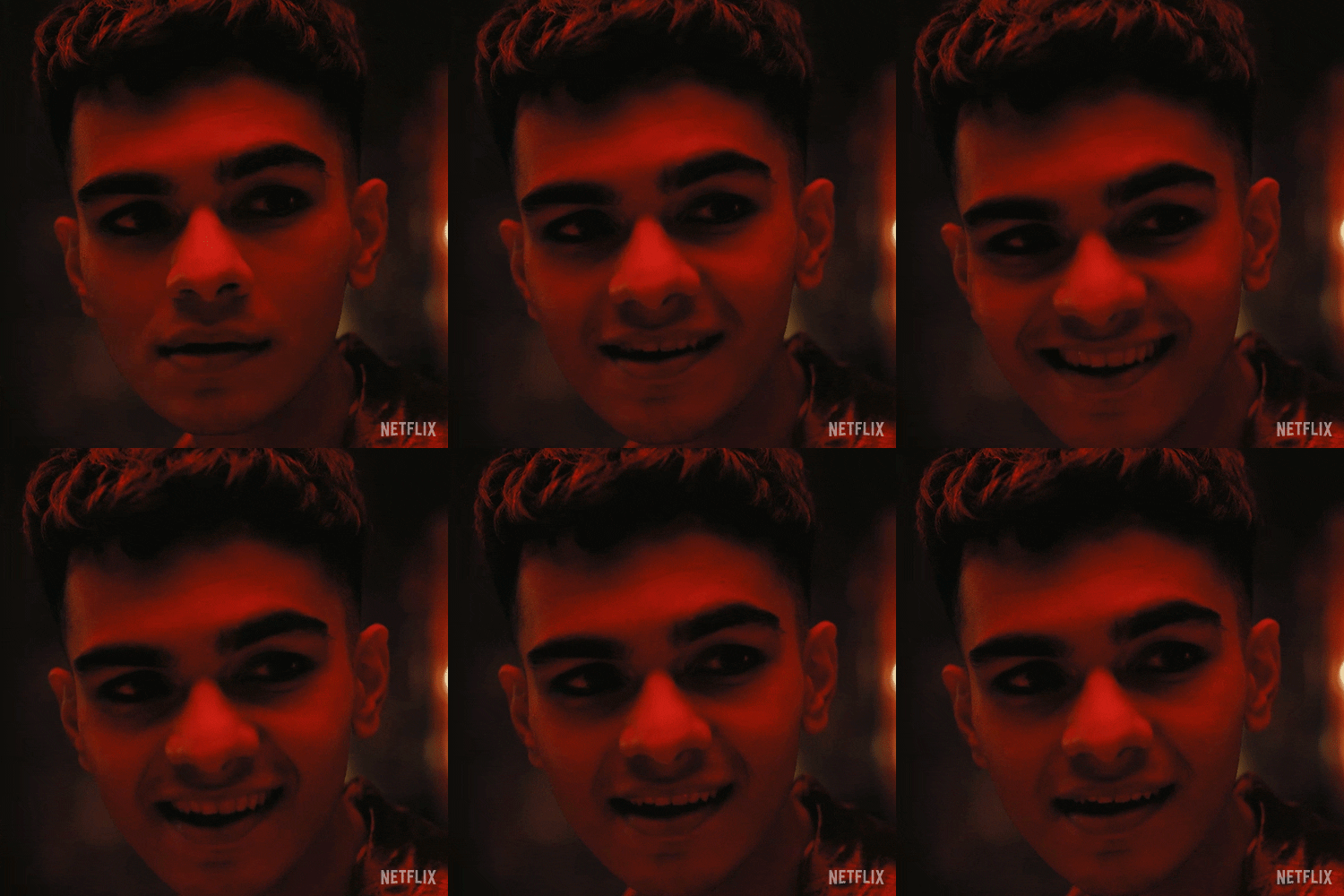
‘The Masque of the Red Death’ and Experiential Marketing/ Spectacle
Prospero Usher’s masque-rave party is essentially immersive experiential marketing.
On steroids.
It’s promoted as an exclusive event with exclusive guests. The epitome of decadence and debauchery, where anything can happen, with a high-end Glenfiddich whiskey library of libations on tap, leading to and end-of-night orgy.
#MIMO.
Experiential campaigns (not exactly like Prospero’s) work so well because your target audience will remember the environment and emotional experiences they are involved in. It’s more memorable than static campaign messaging.
Like:
- Pop-ups
- Influencer events
- Immersive theatre
- Branded experiences
- Escape rooms
- Fan conventions (or ‘Cons’)
The problem with Prospero’s pop-up?
It’s a shallow spectacle without any genuine human foundation underneath it. Prospero just wants to prove himself to his family and be a professional party animal/ “It” boy.
Yes, spectacle gets attention, but substance builds trust.
‘The Tell-Tale Heart’ and Why Transparency Matters (More Than Ever)
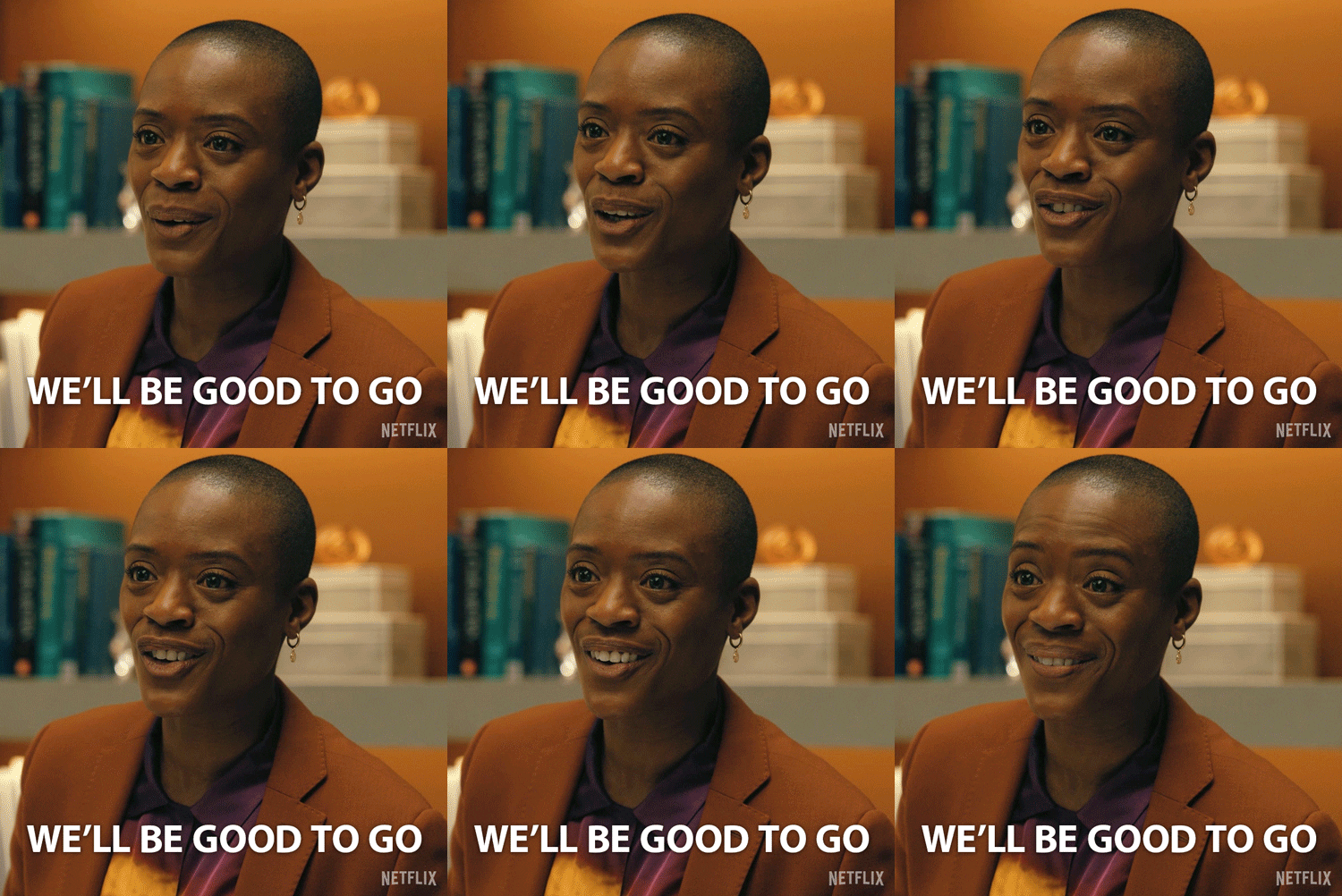
Victorine’s storyline is uncomfortable to watch due to the lies and guilt surrounding the revolutionary ‘heart mesh’ she’s testing with her partner, Dr. Ruiz.
When she accidentally kills Ruiz in a fit of rage, she represses the event, thinking they’ve merely argued and that she’s still alive.
But, the guilt and truth won’t say hidden, as time goes on, the louder the metaphorical heartbeat/ heart mesh becomes.
You can relate this to audiences and their behaviour: they are incredibly good at sensing when something feels dishonest, performative, overly-polished, misleading, Prospero-level superficial and hollow.
Especially when it comes to AI marketing, sustainability claims, customer testimonials, thought leadership pieces, and authenticity-led campaigns.
The louder brands try to gloss over uncomfortable or inconvenient truths, the louder audiences hear the heartbeat of truth and suspicion underneath.
Transparency matters now, more than ever when content can be fabricated or artificially created without creativity or consideration.
Tamerlane, Goldbug + BILLT
Tamerlane is my favourite.
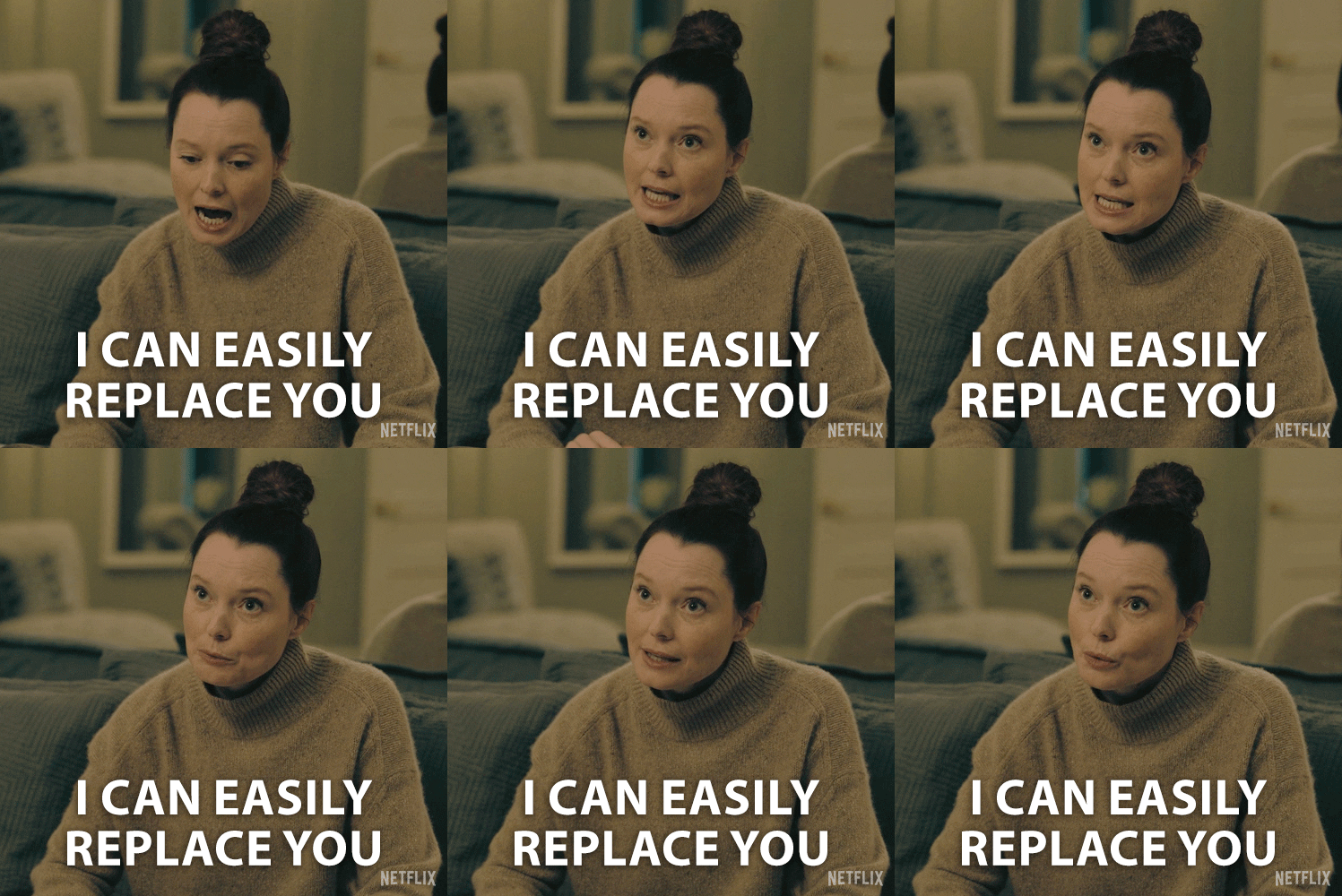
She’s intensely building a lifestyle ecosystem, promoting wellness, luxury, and identity, so people don’t just use Goldbug. They’re meant to emotionally buy into the lifestyle surrounding it, through personalised lifestyle ‘boxes.’
And Tamerlane is relying on her husband Bill’s fitness brand, BILLT, for success through collaboration, separate from the Usher family business.
Despite how fractured and volatile their relationship is, Tamerlane needs Bill’s established fitness image to reinforce credibility and build desirability because both brands share the same values and similar audiences.
Think:
- Fitness brands launching supplements
- Wellness creators launching podcasts
- Beauty founders creating clothing lines
- Influencers expanding into drinks, skincare, apps, and events
Together, they create a connected ecosystem.
‘The Raven’ (Verna) and The Power of Recurring Symbols
Verna is one of the smartest characters in the entire series.
She appears repeatedly in different forms and Poe narrative references, while still feeling symbolically connected.
Verna represents the consequence of human greed and fallibility… and great branding can work the same way when they create recurring emotional symbols audiences instantly recognise, too.
For instance, the Netflix “dundun” jingle, Nike’s swoosh logo, the Barbie pink colour, Letterboxd’s circles, and even Apple’s minimalist style. You don’t need to explain them because we all understand the meaning and feelings we derive that are attached to them.
It’s like the ecosystem approach in the show.
C. Auguste Dupin and The Importance of Understanding Your Audience
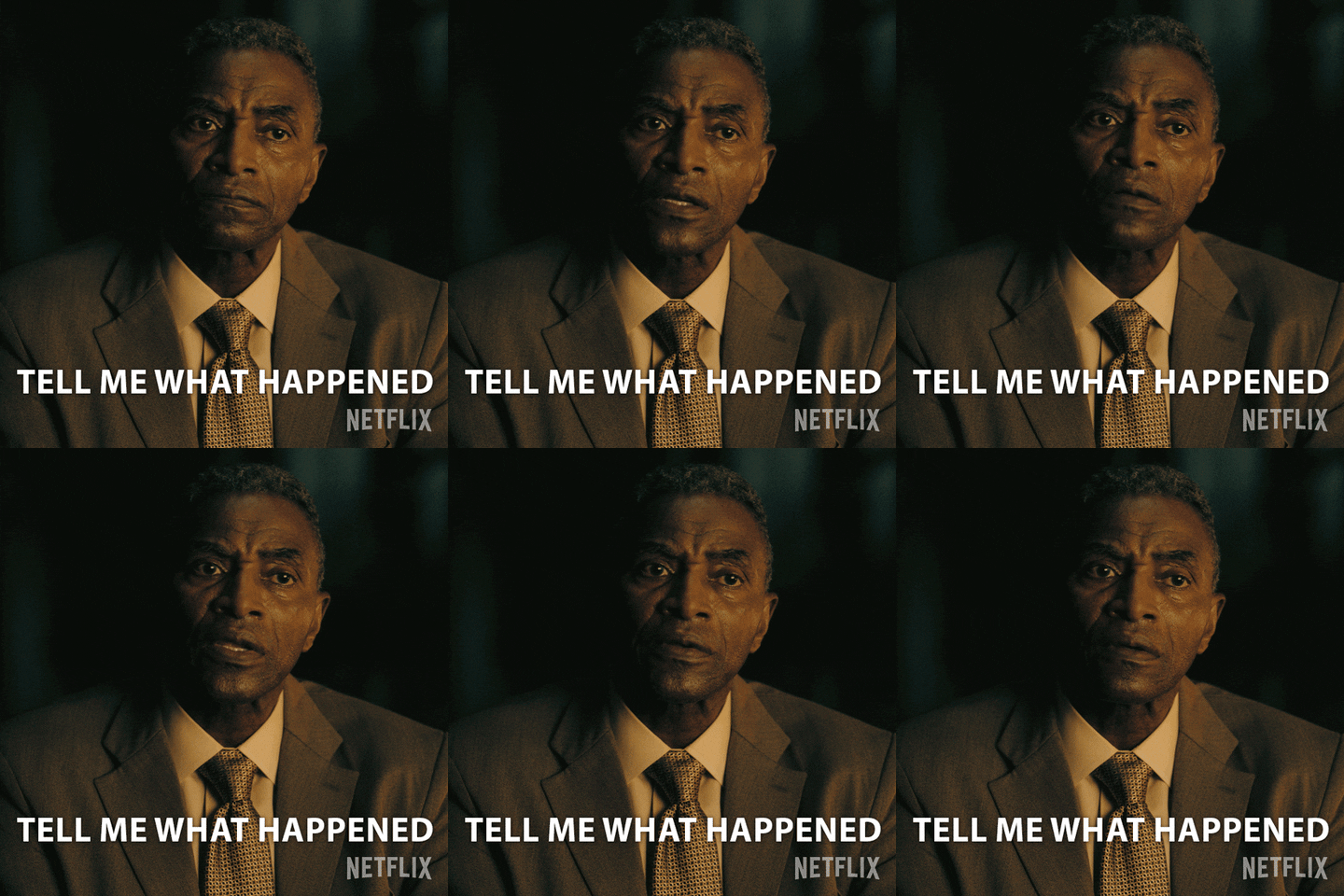
Dupin is our conduit to piecing The Fall of the House of Usher, including all of the Poe narratives, together.
Roderick is explaining everything to Dupin over the course of his final night, revealing what really happened and why to the rapidly diminishing Usher bloodline.
In fact, Dupin spends the majority of the series observing, questioning, deciphering… and marketing requires exactly the same thing.
The strongest brands deeply understand their customer behaviour (pain-points, fears, motivation), emotional drivers, language, community culture… over demographics and statistics.
Campaigns and ecosystems work best when its audience genuinely sees itself reflected in the messaging.
The Show Rewards Attention, Too…
If you know Poe’s collective work (like Mike Flanagan does), you’ll have spotted all of the call-backs, literary and character references, and this creates something modern brands really need:
Audience participation.
People love discovering these hidden details, Easter eggs, inside jokes, lore, and interconnected storytelling. It’s how fans and fandoms form, like an ecosystem or world that audiences want to keep exploring.
Just don’t be ‘too Usher’ about it.
So, ‘WXTMAY’ Buddies…
What’s the strongest example of a brand ecosystem you’ve seen… and which brands feel like they’ve built actual fandoms rather than just customer bases?
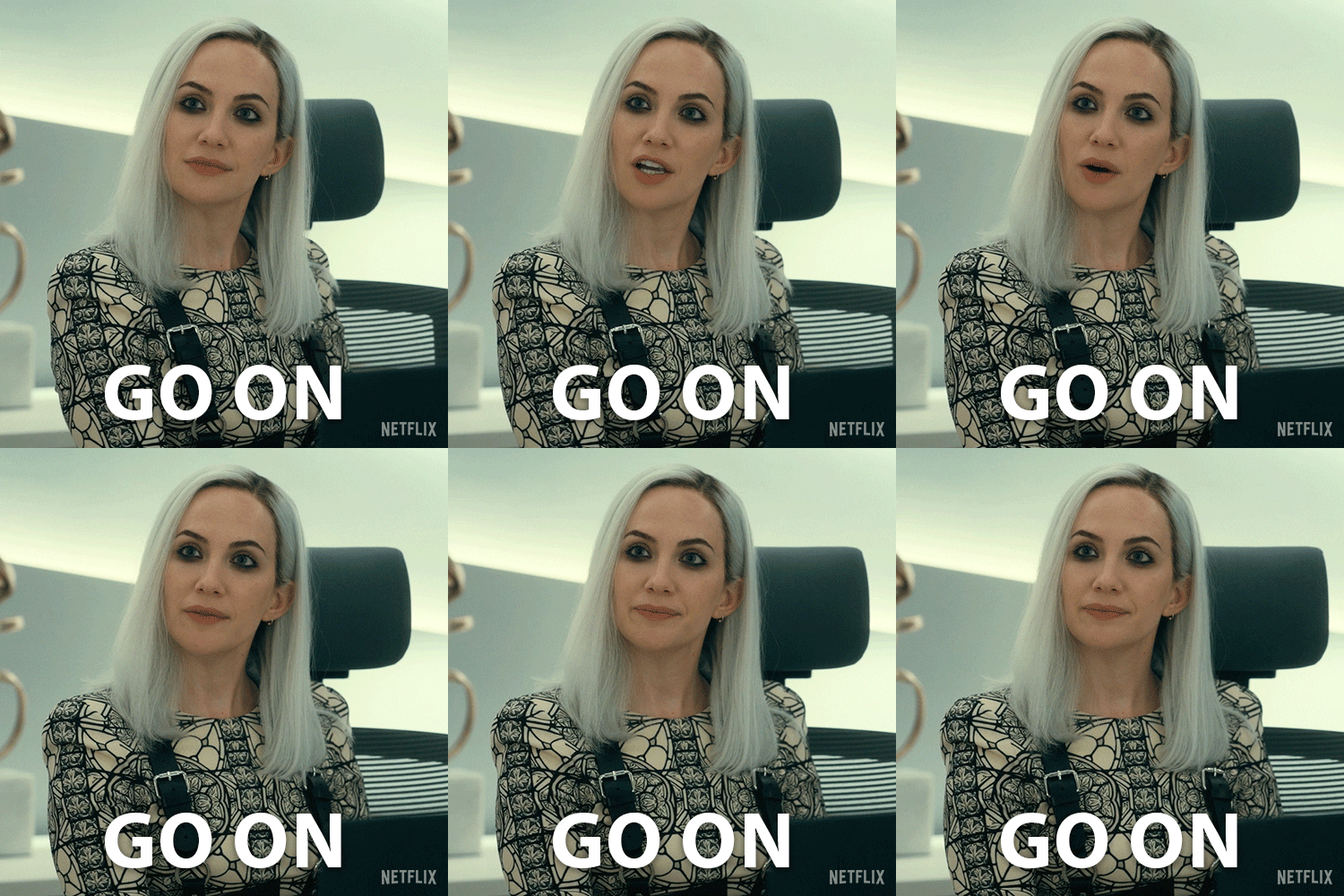
You can (re)watch all episodes of The Fall of the House of Usher on Netflix now.
 Fourth Wall Breach
Leave a comment