
I recently saw Backrooms at the cinema aaaaaaaaaaaaaaaaaand…
I loved the concept…
And the first two acts.
But, the last act…
I’d checked out and was waiting for it to end, which I take no joy in admitting to. Choices were made by the filmmaker and they just weren’t for me.
However, the atmosphere, the score, and those endless corridors: Deeply. Unsettling.
Is it the yellow hue, that off-off-whiteness, the softer-yet-still-clinical feel that subliminally perpetuates a ‘something feels wrong but I can’t explain why’ energy?
It’s internet horror culture evolving into cinema… and it works!
But–
The film goes full Lynchian fever dream once the therapist enters the ‘Backrooms’ and there’s that surreal dinner table sequence.
Which, to be fair, I appreciate the bold, weird, and deeply uncomfortable swing…
BUT–
It was a swing and a miss for me. While I appreciate abstract storytelling, I’m not always satisfied with it if it feels like it’s just a mess that lacks any kind of meaning.
Saying that, Backrooms made me think about something surprisingly useful from a marketing perspective:
Immersive environments.
Backrooms immerses you (especially Clark, played by Chiwetel Ejiofor) with more than its secret space: with curiosity, exploration, uncertainty, participation, spatial storytelling, and that liminal sense of dread.

The environment becomes the experience.
My friend Helen (Hi, Helen!) said this concept would make an incredible escape room. I 100% agree!
And one of the reasons Backrooms became so popular online is because it taps into a very specific feeling that is really an oxymoron:
Recognisable unfamiliarity.
It’s the endless office corridors, faded carpets, fluorescent lighting, abandoned commercial spaces that feel uncanny and oddly relatable.
You feel like you’re being followed, you’re not alone, and something appears around the corner — Eeeeek!
Kane Parsons’ original viral YouTube videos exploded online partly because audiences immediately understood the vibe before understanding the lore. The film adaptation leans heavily into this immersive environmental storytelling.
Even if you don’t physically enter the Backrooms, you mentally do.
(That’s important.)
Great marketing environments work the same way because…
The strongest brand experiences aren’t passive.
They’re:
- Interactive
- Exploratory
- Participatory
- Emotionally and/or physically immersive
Why do you think escape rooms became so popular in the first place? We’re not just satisfied with standalone entertainment. We want involvement.
Or…
Involvetainment!
Coined it. Copyrighted it. Send me ma monies, pleaseandthankyou!
We enjoy engaging our brains to discover and solve things, navigate spaces, and interact with stories that make us feel part of an experience.
Tap into that, brands!
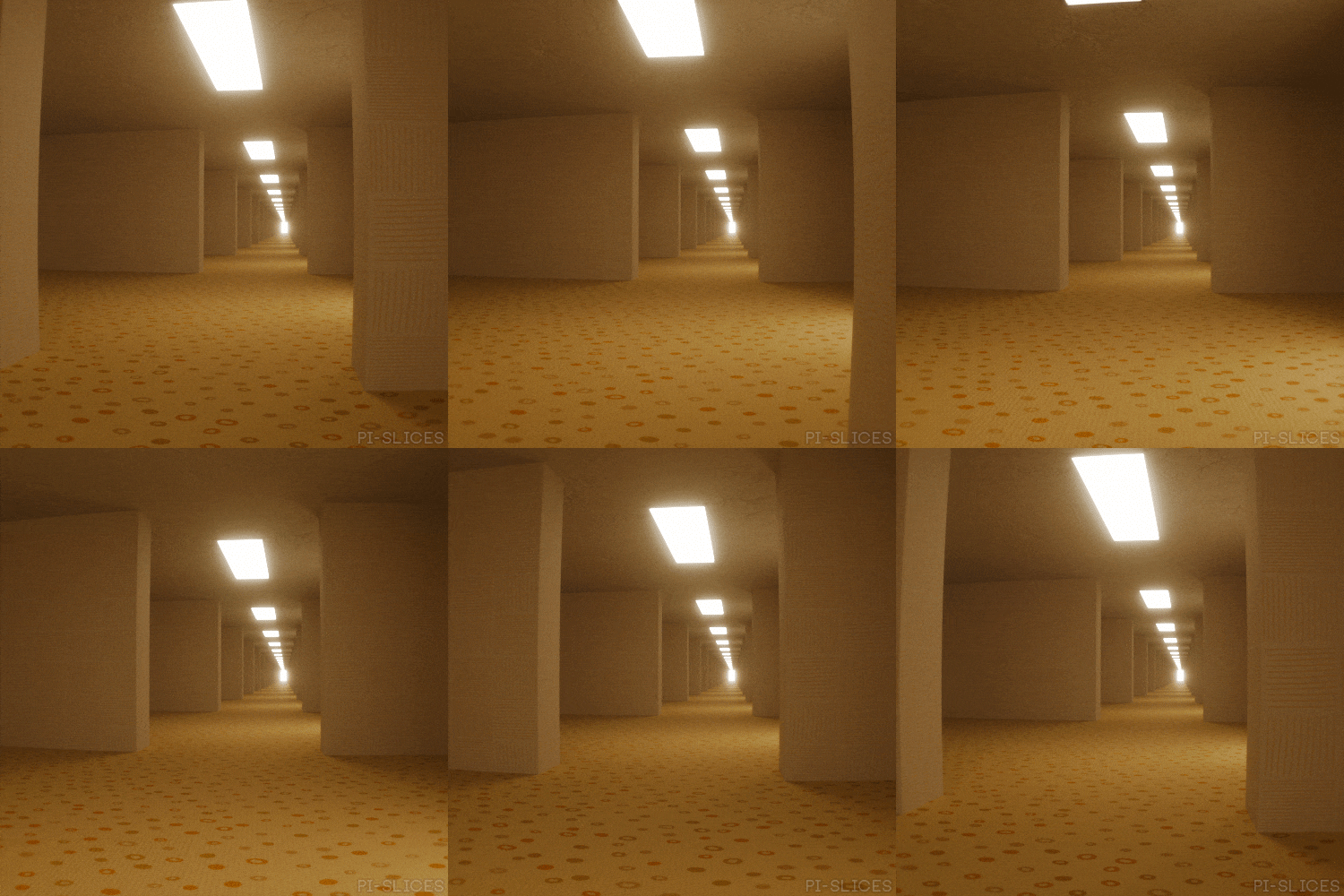
Imagine if your campaign became a ‘Backroomsy’ kinda place…
Not just campaign ads, landing pages, and social posts.
(I’m not saying don’t create these anymore. The emphasis is on the adverb, “just.”)
What if your campaign included environments your customers could ‘enter,’ too?
It doesn’t have to be literally or physically entering. Your concept can be an emotionally or experientially style of entering.
A great example is how the Backrooms itself evolved digitally…
Starting as a creepy internet image posted online, it then sparked:
- Fan theories
- YouTube videos
- Collaborative storytelling
- Games
- Lore communities
- ARG-style content
…Plus, it’s own A24 film.
Its audience consumed, then expanded the initial idea, which is powerful, inspirational community-driven engagement.
And interactive environments don’t require MA-HOO-SIVE budgets…
This is important because immersive marketing doesn’t automatically mean, “Go and build an activation space. That’ll cost you £2 million.”
Alternatively, immersion can be in the form of:
- Interactive webinars
- Branching video journeys (where you can craft ‘choose your own adventure’ style videos with apps like Interactr.)
- Gamified experiences
- Scavenger hunts
- Collaborative online spaces
- LIVE events and challenges
- Community storytelling
- POV-based social content
You can even opt for simple things like:
- QR-code trails at events
- hidden Easter eggs in campaigns
- Choose-your-own-outcome demos
These are all ways to help make your audiences feel involved rather than marketed to.
(Even though you’re still marketing to them.)
The art of abstraction can work brilliantly…
One of the most interesting things about the film is that it refuses to fully explain itself.
By making this choice, the film taps into ambiguity, interpretation, and emotional projection; provoking different audience reactions and motivating them to bring different fears into the environment.
Just like the late genius David Lynch did.
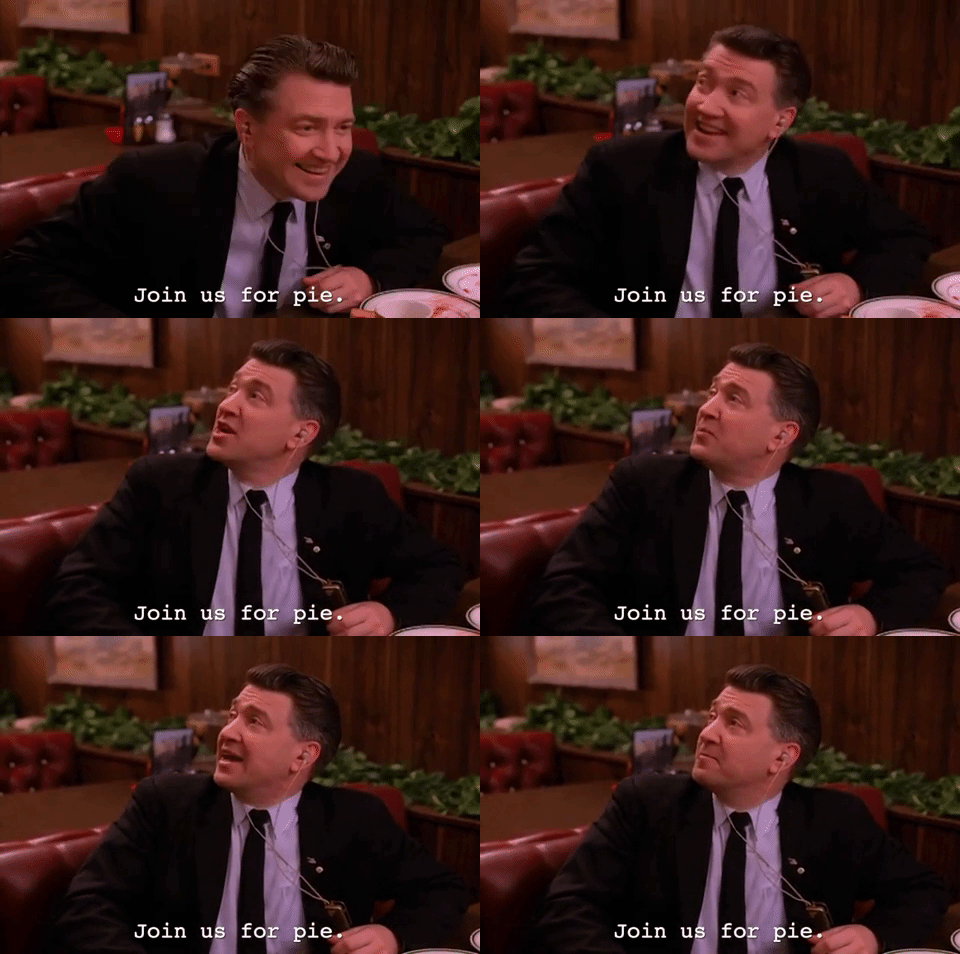
That’s incredibly relevant for branding because not every campaign needs to be hyper-literal product marketing.
Abstract ideas can create stronger emotional engagement, especially when audiences recognise the feeling being portrayed.
This is great as an attention-grabbing, storytelling hook.
An example of partnerships and collaborations…
Backrooms works because it merges:
- Internet culture
- Horror
- Gaming
- Found-footage filmmaking
Different worlds are overlapping here, people.
Brands can do the same through collaborations that feel emotionally-aligned rather than industry-aligned, e.g.:
- An edtech company partnering with a wellbeing brand
- A productivity tool collaborating with a coffee company
- A learning platform working with creators or gaming communities
- A school campaign tied to cinema, escape rooms, or live events
The sectors themselves don’t always need to match, but the audience mindsets do.
‘Backrooms’ became such a phenomenon is because…
It feels less like traditional storytelling and more like entering a strange, shared experience.
This works for marketing and marketing messaging in the same way:
- Not: “Here is our product.”
- But: “Come explore this idea with us.”
People will remember participating in experiences that made them feel something, but preferably with fewer terrifying fluorescent corridors and nightmare entities lurking around corners.
Although…
I’d be happy with a Backrooms, fear-filled version.
BUT–
With more story and a stronger third act, IMHO.
Question time, WXTMAY Buddies…
What’s the most immersive brand experience or event you’ve ever encountered?
And would you survive the Backrooms…
Or immediately sit down and accept your fate?
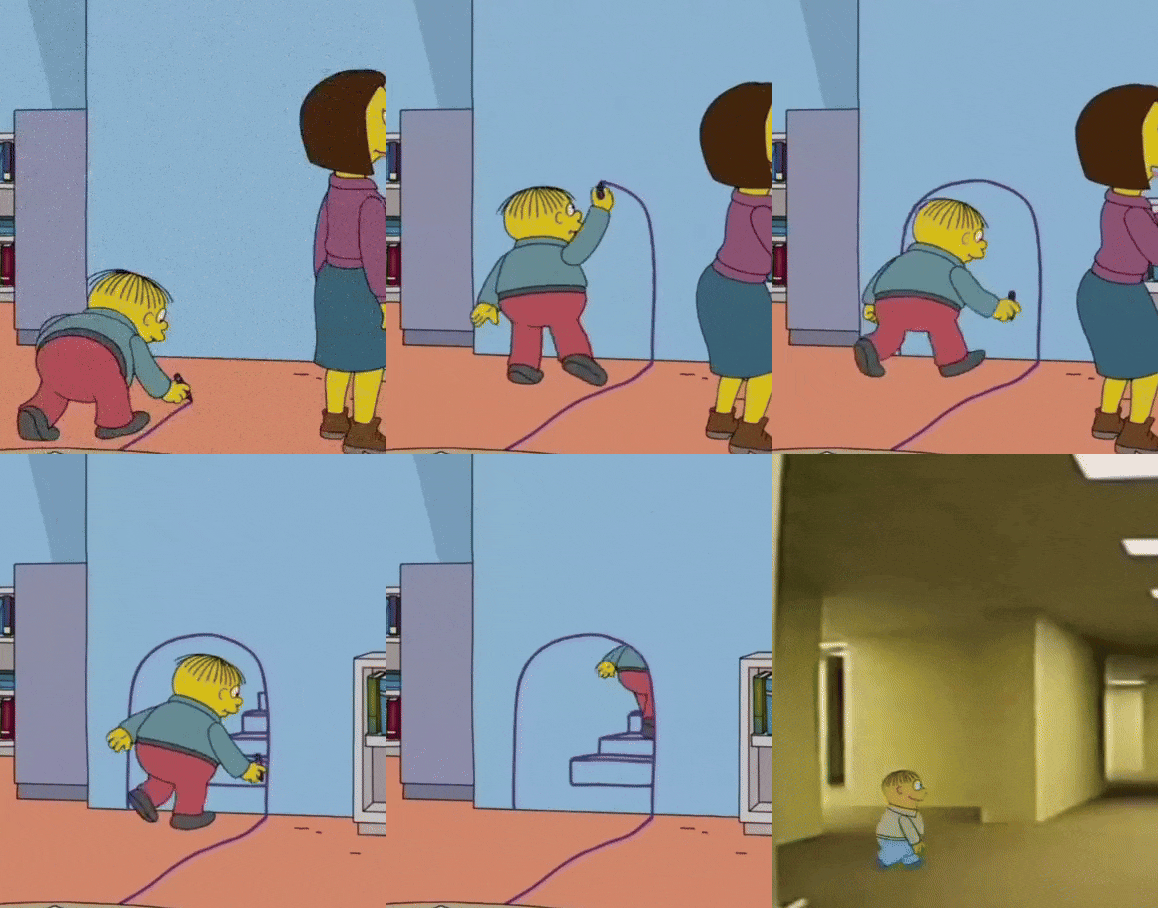
 Fourth Wall Breach
Leave a comment