
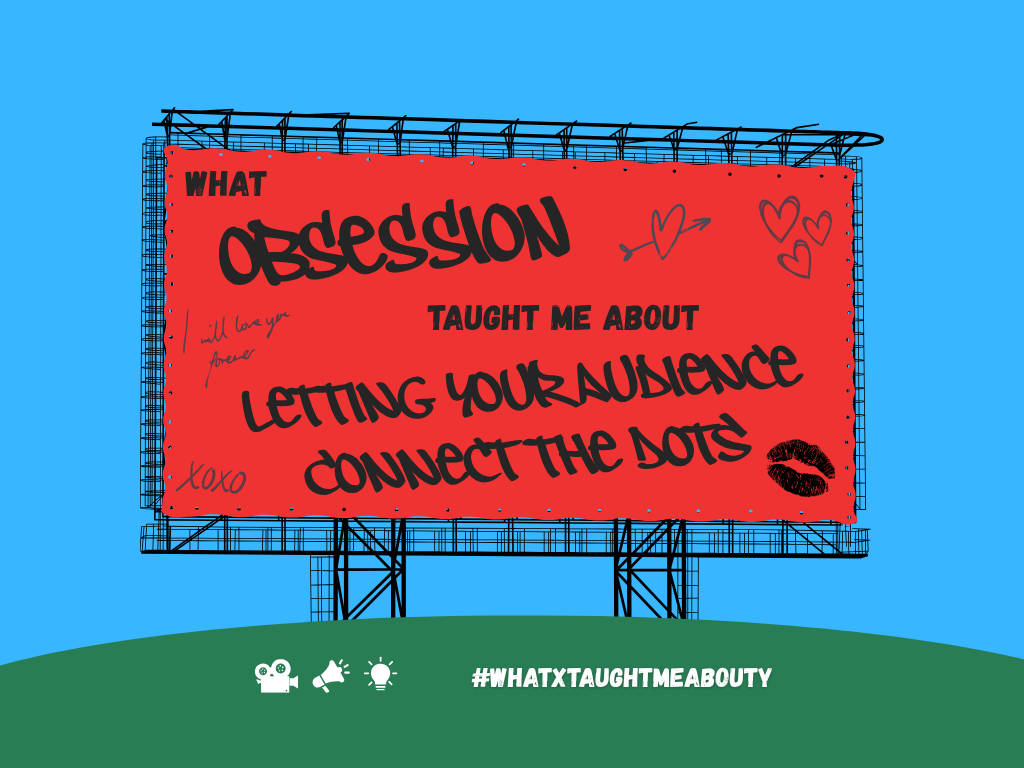
Have you experienced Obsession?
Notice that I didn’t ask whether you’ve seen YouTuber Curry Barker’s feature-film debut because I don’t think Obsession is simply a horror film you sit back and watch.
Nope, it’s definitely an experience.
I admit, I was a little late to the party to see this at the cinema (by about 2 months), but, WOW…
WOWEE.
Also, 2+ months in the cinema since it’s initial release with multiple showings throughout the week, including weekends? For an independent horror film, that’s incredible.
In fact, Obsession is currently the highest-grossing film ever to have been made with a budget of less than $1 million ($750,000 approx.)
[Standing ovation, clapping, hoopin’ and hollerin’.]
I loved the long takes, the creeping background action, the way shadows are used to make characters and moments feel even more unnerving, the way Nikki moves in that jerky rhythm, the way she snaps back from being intense and obsessive to calm and composed = poetry.
Love a bit o’ l’amour fou. (My second year university short film project was actually called L’amour Fou.)
Plus, that ending… is bleak. It stayed with me after I left the cinema, lingering. I think it had to be due to that final scene, on par with the final scene in Pearl with Mia Goth.
BUT–
After I experienced Obsession and WhatsApp’d my friend Helen almost immediately afterwards, I realised I’d been watching an entirely different film to her.
Our reactions and readings were practically polar opposites…
One film. Three audience members. Three completely different interpretations.
In a nutshell, Obsession is about a lonely man named “Bear” (short for Barron), who buys a magical twig (called the ‘One Wish Willow’) from one of those crystal shops and casts a spell/ wish to make his long-time crush, Nikki, fall in love with him.
More specifically: to love him more than anyone else in the world.
Inspired by the first segment of The Simpsons: Treehouse of Horror II, which is influenced by W. W. Jacob’s short story, The Monkey’s Paw, the ‘One Wish Willow’ wish turns dark and Nikki becomes a violently obsessive monster!
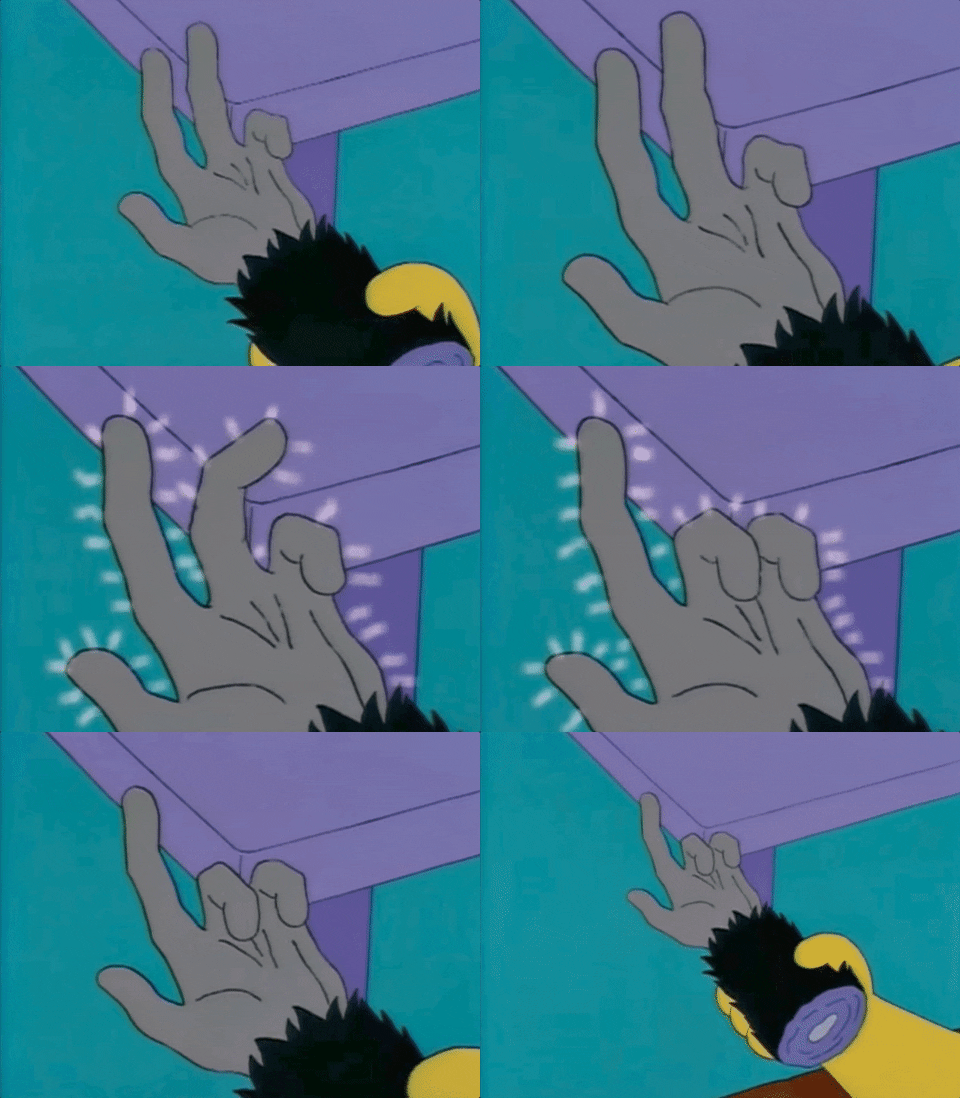
So… I instantly (and vehemently) judged Bear or as I like to call him, “Barron Bear.” I decided he was a villain; he made it happen, he was wildly irresponsible. However, when I told Helen my interpretation, I realised I was reacting to Bear’s actions through my own moral lens.
[HELEN] “Why do you think he was the villain? He didn’t know what was going to happen, did he?”
And just like that: I hesitated!
Helen raised a great point:
If you use a toy sold to you as a “novelty, collector’s item,” why would you think it’s going to come true in a world where we’re led to believe is based in a reality that resembles our own; where wishes don’t come true?
My opinion was swayed.
Well, it lowered the percentage of my view of Bear as a villain. (I still think he’s a little villainous, weak, and short-sighted.)
There was a point in the film when he knew his wish was definitely the reason for Nikki’s behaviour (the phone call he makes to the ‘One Wish Willow’ customer services that is shown in the trailer), but I judged him earlier based on the information I had (as the audience member), with my perspective moulded by the film (narrative, visuals, music, etc.).
I shared this with my friend, Lucy, who had another interpretation. It was closer to my instant reaction, but with more detail and takeaways from other key moments throughout the film:
[LUCY] “”Bear” is meant to be like an ‘incel,’ where he’s so scared of rejection. Nikki gave him a way in to admit his feelings, but he said, “No, we’re friends,” then proceeded to insult her because he’s so scared of being ‘friend-zoned.’ [By calling her a nickname she hates ‘Freaky Nikki.’]”
“He has a crush on her, but he doesn’t know her, just a weird idea of her that he has in his head… and takes away her choice of whether she wants to be with him anyway. He knows the wish has happened…”
“The most harrowing scene is when he’s sneaking out in the middle of the night to see his friend Sarah. ‘Real Nikki’ is able to override the wish to say, “Kill me.” Bear’s response is, “What’s so bad about being with me?” ‘Real Nikki’ replies, “I’ve never been with you.” [As it’s ‘Wish Nikki,’ not ‘Real Nikki’ he’s been ‘dating.’] The whole thing is really disturbing to me as it’s literally this man controlling this woman and she has no choice but to go through what she’s going through.”
Yep, there were three of us who had watched the same film and drawn different conclusions.
This immediately reminded me of something I studied years ago while completing my BA in Film and Television Studies at Brunel University London. (AKA “Brent University” as featured in the incredible Big Boys LGBTQIA+ TV series that’s so funny and devastating, it left me sobbing during the series finale.)
Back to my thought: our different perspectives and connecting-of-dots reminded me of Stuart Hall’s Encoding and Decoding Model…
It’s one of those theories that changes how you look at almost everything with Hall arguing that audiences don’t simply absorb meaning exactly as the creator intended.
He identified the Three Reading Positions or interpretations of a text:
- Intended/ Dominant Reading: The exact meaning/ message the author/ filmmaker wants you to take away from the text/ film.
- Negotiated Reading: You broadly understand the intended message, but bring your own meaning into it. “I understand why Bear behaved that way, but I still don’t agree with him.”
- Oppositional Reading: Downright objection! The author’s/ filmmaker’s intention is not recognised in the source material and a new narrative is constructed.
It’s the same with audiences in relation to brands and marketing messaging…
Every campaign is encoded and every audience decodes it differently…
As marketers, we spend an extraordinary amount of time crafting and refining brand and campaign messaging with the best hooks, headlines, calls to action, colour palettes, fonts, video content, landing pages, and copy in general.
In all of the above, we encode what we want audiences to think, then… reality happens with different audience members having different interpretations. (Like me, Helen, and Lucy.)
Here’s an edtech example:
- One teacher sees an AI lesson-planning tool as workload reduction. Another teacher sees the beginning of teachers being replaced.
- One parent sees homework software as independence. Another parent sees more screen time.
- One school leader sees innovation. Another school leader sees unnecessary risk.
These interpretations can be made from the same campaign, generating completely different meanings.
The billboards weren’t just ads…
Then, I discovered how Obsession had been marketed and things started clicking because the campaign promoted the film while behaving like it, too.
Billboards appeared in New York and Los Angeles showing what looked like an innocent handwritten love note alongside a phone number.
Curious passers-by were invited to text ‘Nikki’ with replies starting in a sweet and romantic tone… before the messages became stranger. Sometimes they arrived late at night and days later, the billboards themselves began changing from love notes to frantic scribbles. The tone noticeably shifted from affection to something much darker, more erratic, and uncomfortably obsessive.
Meet “Freaky Nikki.”
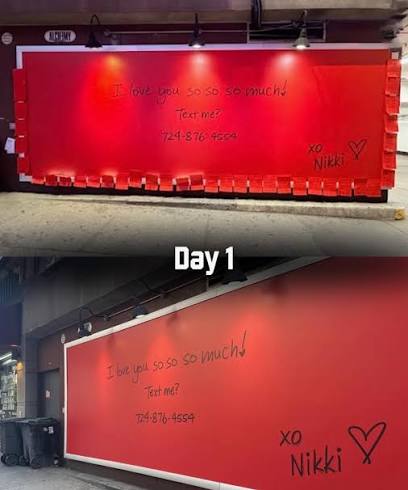
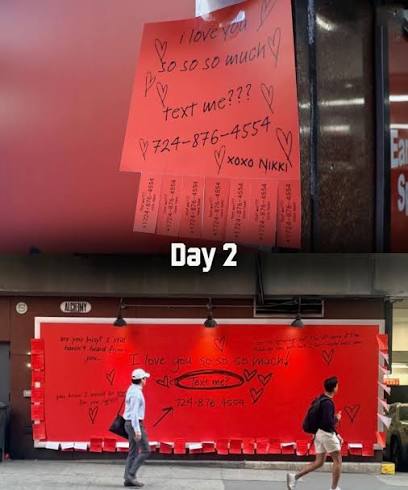
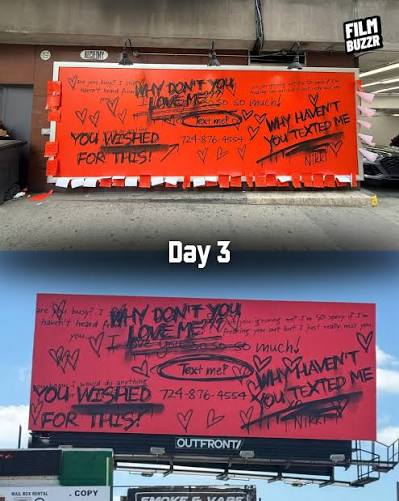
Source: FilmBuzzr | Instagram Threads
This campaign strategy focused on engagement, encouraging audiences to participate in the story, not merely advertising the film’s release in a traditional style.
Well, the marketing story, blurring fiction with reality in a creative way.
It was a great a teaser or invitation to go and watch the film.
Marketing is far more powerful when people make the discovery themselves…
There’s a big psychological difference between being told something and discovering it yourself.
When a brand tells us something, our natural scepticism kicks in because we know (and feel) we’re being marketed to, manipulated, and/or asked to buy something. Our brains instinctively begin filtering, calculating, and interpreting to illicit a typically negative or oppositional response.
BUT–
Obsession never announces, “This is an immersive marketing campaign” to give it any kind of marketing or branding context.
Nah…
It goes right ahead and immerses you, without any sales pitch or preamble.
The ‘One Wish Willow’ didn’t exist… or did it?
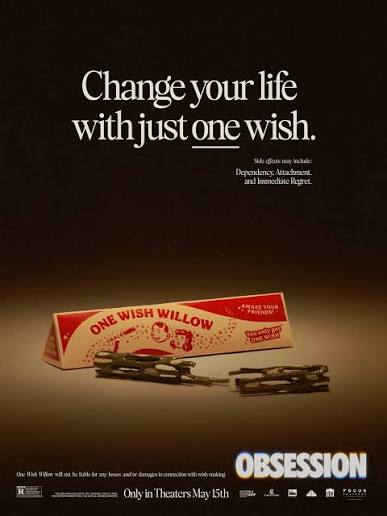
Source: Movie Moments | Instagram
One of my favourite parts of the campaign was the fictional/not-so-fictional product… kind of.
Rather than solely existing inside the filmic world, the marketing team created realistic commercials and an authentic-looking product website for the ‘One Wish Willow.’
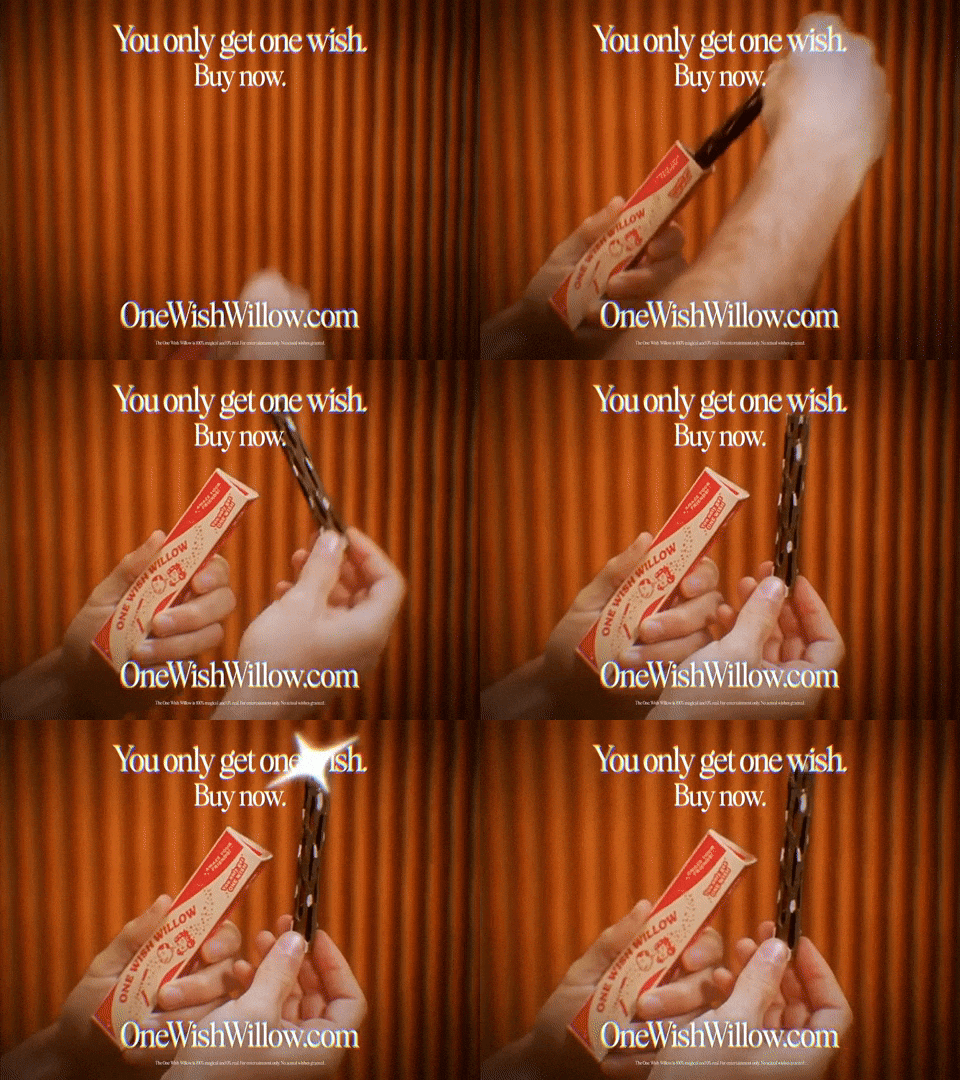
People genuinely questioned whether this supernatural object existed and the marketing campaign leveraged this curiosity by blurring the lines of reality and fiction even more. (Like the billboards.)
This is a great example of creative marketing campaigns that don’t answer questions, because it recognises that this strategy is stronger with more abstract, eye-catching visuals than predictable clarity, e.g. a poster with the film title, imagery, and a cinema release date on it.
(FYI: You can purchase a replica of the ‘One Wish Willow’ on Amazon here.)
Great creativity is achieved through a symbiotic relationship between the creator and the audience…
Creative campaigns aren’t necessarily those with the biggest budgets or the cleverest visual FX. They’re the campaigns confident enough to trust their audience and leave those significant, well-placed little gaps to instil intrigue.
The little mysteries and moments where audiences get to join the dots by collaborating actively, instead of watching passively.
Again, like the Obsession billboards.
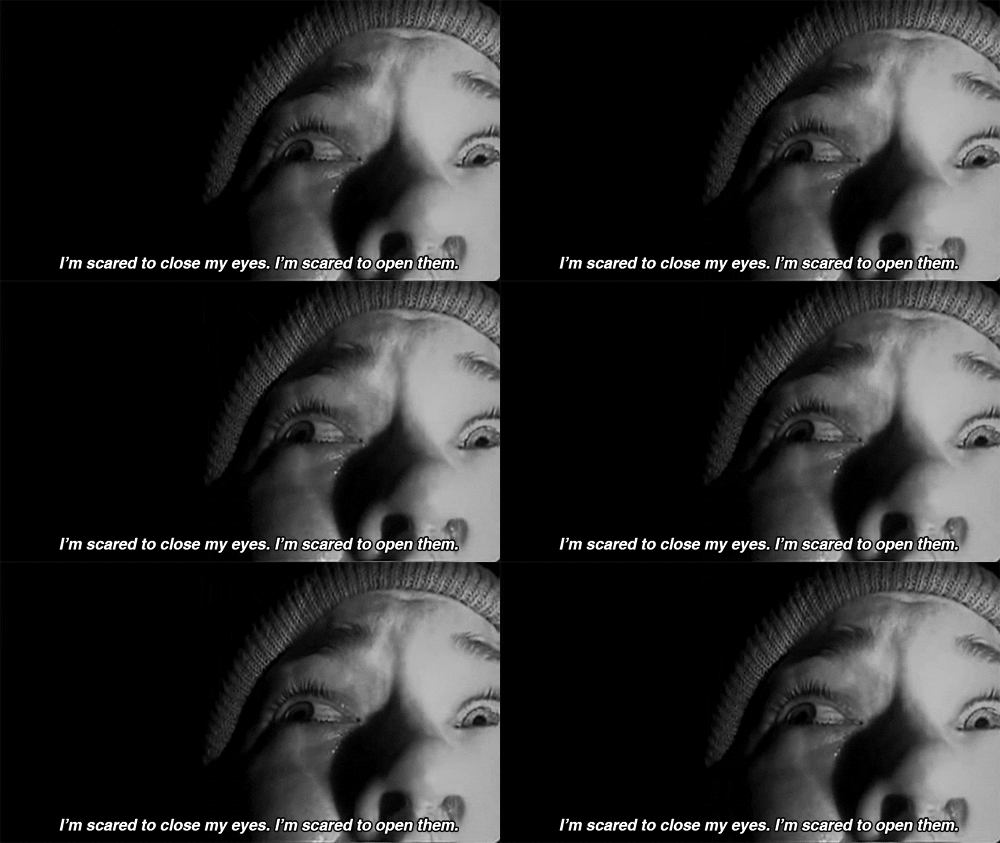
Remember The Blair Witch Project?
- Directed by Daniel Myrick and Eduardo Sanchez, this independent film successfully blurred fiction and reality long before Obsession and even social media was a thing.
- The filmmakers went so far as creating a phony website with pages dedicated to the myth of the Blair Witch and missing posters for the three cast members, which was unique and ‘out-of-the-box’ marketing at the time.
- I remember when it was initially released in 1999 with the fictional ‘mockumentary,’ Curse of the Blair Witch, that made many of us believe the footage was real.
Confession: The Blair Witch Project scared me and I still think it’s one of the scariest films I’ve ever seen.
Before I (try) to let you go…
One thing Obsession taught me is that audiences consume and complete stories.
As marketers, we spend valuable time perfecting the marketing message, through the copy and visuals, but the final version of campaign content (the ads, landing pages, downloadable assets, etc.) isn’t really created by us alone.
Technically, it’s incomplete when it’s published/ launched.
It evolves with audience reactions, interpretations, and participation… and relies on this to be successful. Just like motivating people to go to the cinema to see a film.
Overall, the Obsession marketing campaign worked so brilliantly because:
- The billboard didn’t tell audiences that Nikki’s ‘Wish character’ was dangerous. The text messages let them discover it.
- The ‘One Wish Willow’ didn’t tell people the fictional world was real. It simply blurred the line enough for people to question it.
- The audience became collaborators, not spectators.
Does this inspire you to leave enough unsaid for your audience to connect the dots in your next marketing campaign?
More ‘WXTMAY’ questions…
I’d love, love, love, love, love to hear your thoughts.
(Don’t ask me twice… or I’ll duct tape the door shut if I need to.)
- Has a film ever completely changed your opinion after discussing it with someone else?
- What’s the most creative marketing campaign you’ve ever experienced rather than simply watched?
And finally…
- If your brand could blur the line between fiction and reality for one campaign, what would you create?
Aaaaand…
Here’s my TikTok and Instagram shout-out about Obsession… which I shared on LinkedIn, too:
 Fourth Wall Breach
Leave a comment