
How about, don’t build a robotic shark, call it “Bruce,” and think it’ll perform the way you want it to on the night.
Like this:
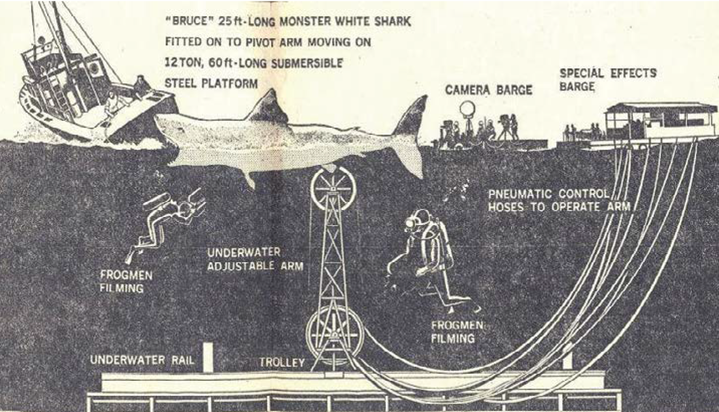
Despite the mega mechanical setbacks that caused Steven Spielberg so much overwhelming stress throughout production, Jaws launched his career into the stratosphere.
What else did it do?
It permanently ruined swimming in pools,open water, and frankly, any body of water for generations of people who have never even encountered a shark. And when I say “any body of water,” I include childhood bath-times in this category.
And what’s with the PG rating?
When Jaws was re-released in UK cinemas in 2012, the BBFC raised this to a 12A, which still seems quite low, IMHO.
Because technically, it’s a slasher…
Jaws is filmed like a slasher film with the shark hunting it’s prey and literally slashing-gnashing people with it’s teeth.
Let’s compare it to John Carpenter’s Halloween…
- The Great White and Michael watch, wait, play, and circle their victims before they attack
- Michael Myers is referred to as ‘The Shape’ in the credits and a key identifier when the shark is present is it’s iconic above-water shape: the fin
- Both film scores have a similar tempo and rhythm
It all makes sense.
As well as being an unlikely slasher that even pre-dates the slasher that made slashers a thing (Jaws was released in 1975, three years before Halloween in 1978), Jaws’ narrativethemes include communication, risk, and timing, which makes it a prime film for summer campaign inspo.
Let’s be honest. The shark isn’t the real problem…
Well, it’s not the only problem for the residents of Amity Island, New England.
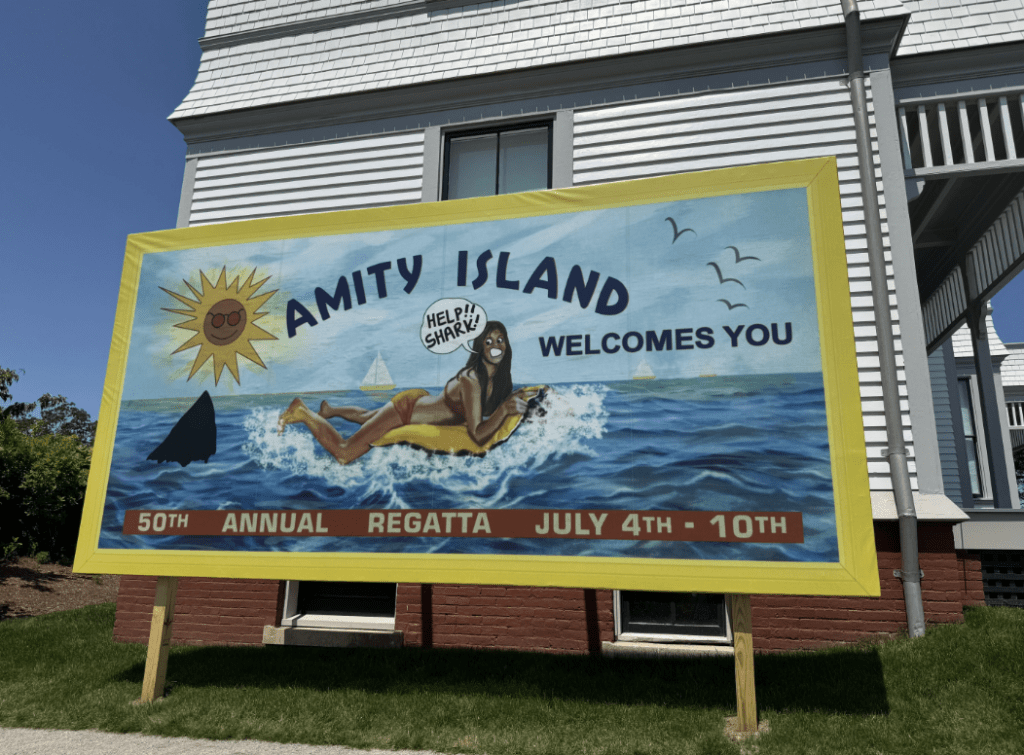
The fact it’s named “Amity” (meaning friendship or harmony) is perfect irony.
During the film’s opening, a young woman is killed by a shark off the island’s coast. (Hippie Chrissie who just wants to go swimming!)
You know, that iconic scene of the shark emerging from the depths that appears on the novel cover art and film poster.
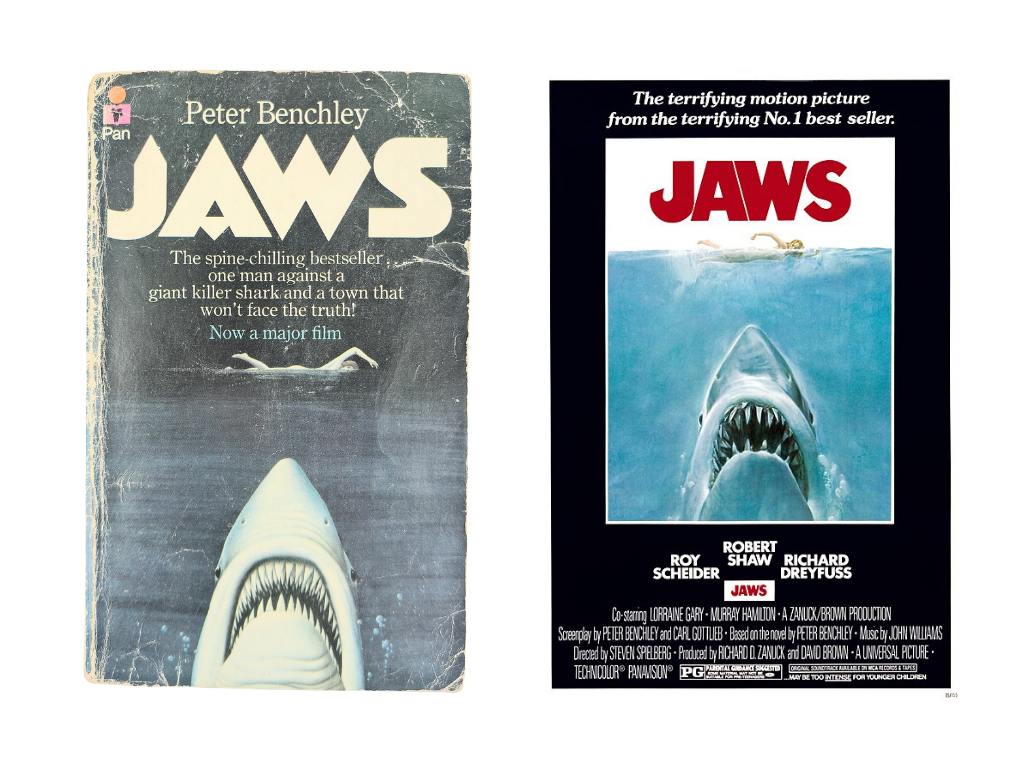
FYI: I read the book by Peter Benchley during the pandemic… and it’s very different to the film.
Also, I hated the book. It was one of my least favourite books that I read in 2022. (Alongside Hannibal by Thomas Harris. I was shocked by how much I hated both of them.)
I was looking forward to reading Jaws after I bought a second-hand copy back in 1996, so maybe the 25-year build-up could never live up to my expectations. I don’t mind that the shark is very much a sub-plot, even a metaphor for the island’s declining economy and politics, but the main plotline… crikey.
It’s mostly about Police Chief Brody’s failing marriage and his wife’s affair with the oceanographer, Hooper.
SPOILER: Hooper dies in the book… and the worst part is where Hooper and Mrs. Police Chief Brody meet and swap sexual fantasy stories. It’s just bizarre and cringeworthy.
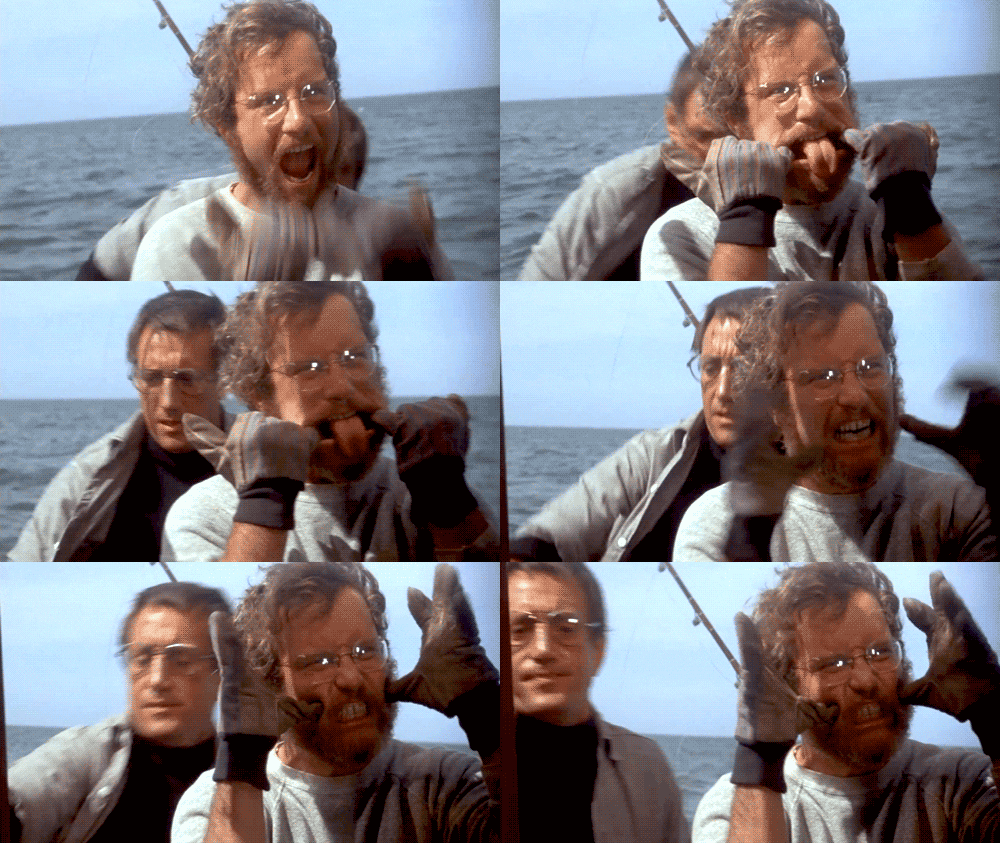
Watch the film for a much better Hooper character played by the incomparable Richard Dreyfus instead.
Back to the film…
Brody wants to close the beaches immediately, which seems logical because a shark + swimmers = carnage.
But, guess what?
The town officials and Mayor, Larry Vaughn, see things very differently.
The big problem is the town.
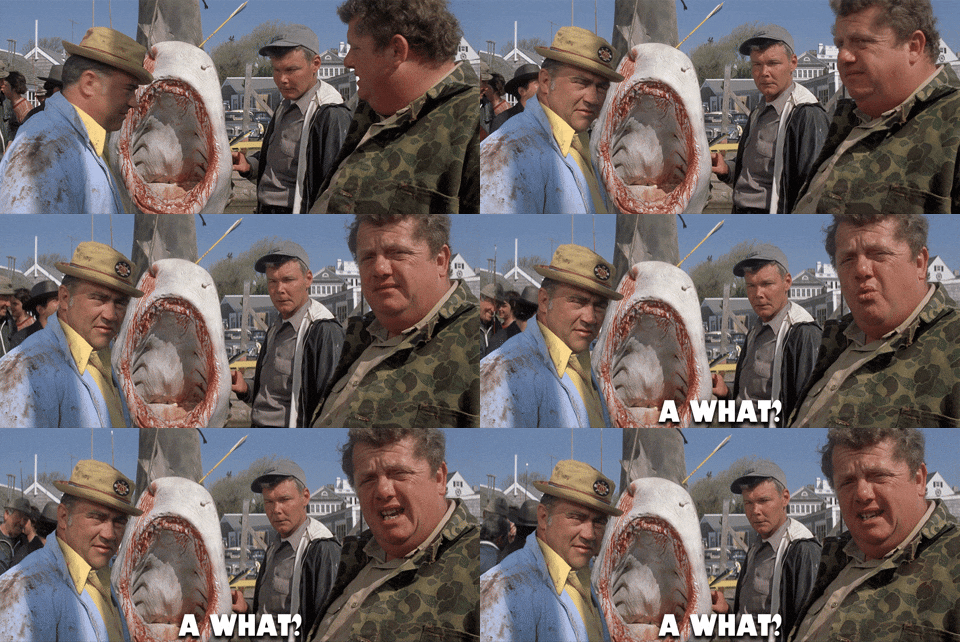
Think of the islanders like the residents of Pawnee, Indiana in Parks and Recreation. (Yep, they’re that bad.)
Their reaction is due to the fact that the Fourth of July weekend is fast approaching, which means local businesses are about to be booming because Amity Island depends on a successful summer season to thrive.
Despite mounting evidence, Mayor Vaughn (in his nautically-fashioned apparel) opts to keep the beaches open to perpetuate the message that, “Everything is fine,” even when everyone knows it isn’t.
The shark attack is kept schtum and there’s no mention of it, except when Brody types it on the coroner’s report under Chrissie’s cause of death.
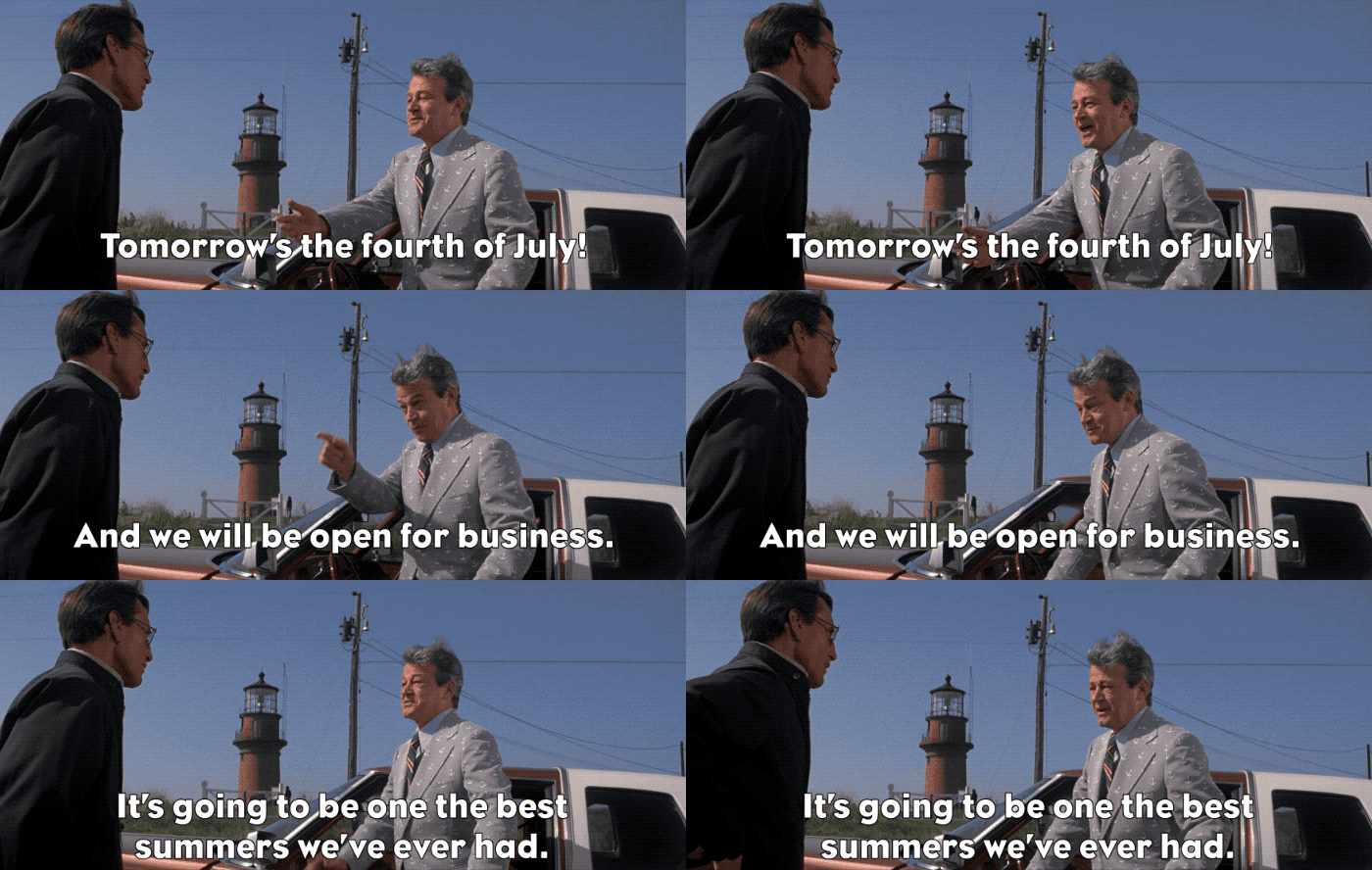
Ultimately, nobody wants to be the Mayor of Shark Island.
And here’s a marketing lesson…
Customers can smell a cover-up…
One of the reasons the mayor’s decisions are so frustrating is that everyone can see what’s happening and the problem doesn’t disappear because people stop talking about it.
It just gets worse.
Eventually the truth comes out and, by then, trust has already been damaged.
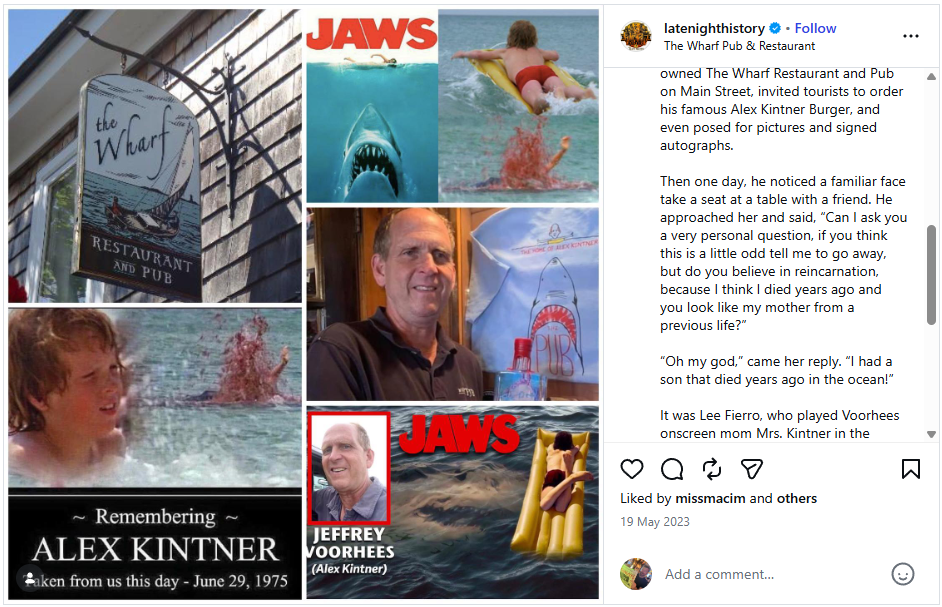
Take for instance that beach scene with Alex Kintner on the inflatable: a child is added to the bloody shark body count in another unforgettably brutal kill.
And Brody gets slapped by the grieving mother when it should have been the mayor’s face that got it.
But, here’s a nice bit of trivia to balance out that bite of terror:
Brands can sometimes do the same thing:
Avoid the difficult conversations and ignore obvious concerns, treating a challenge as if it doesn’t exist by not addressing it, because addressing it might feel too negative or uncomfortable.
It’s not worth the fallout…
Customers are good at spotting when something feels off, whether it’s:
- Rising prices
- Service issues
- Delivery delays
- Implementation challenges
- Product limitations
If something is off, people respect brands that are upfront and don’t pretend there isn’t a ‘shark in the water.’
Always explain what you’re doing about it to fix it to retain trust and flip a negative into a constructive positive.
Every sector has its own shark…
For the Amity folk, it’s the giant Great White.
For brands, it’s usually something less bitey…
The ‘brand shark’ might be:
- Declining engagement
- Seasonal demand drops
- Budget freezes
- Increased competition
- Changing customer behaviour
In the education sector specifically (as I work in edtech marketing), the ‘shark’ can look like the ‘Summer Slide.’
Here’s some edtech examples…
The ‘Summer Slide’ is real…
Every year, schools, parents, and students face a familiar challenge when learning pauses and routines disappear, because knowledge can fade and confidence can dip.
Then, September arrives and educators spend weeks trying to rebuild momentum.
Nightmare!
This ‘brand shark’ is lurking beneath the surface: it’s not immediately visible, but it’s definitely there.
Education brands have a huge opportunity here:
Instead of waiting until September panic sets in, why not help schools prepare now while standing out from competitors who are focusing solely on back-to-school campaigns?
‘Summer School’ has a marketing problem…
The phrase “summer school” often gets treated like a punishment, whereas, the reality is usually much more positive.
These can be the best summer learning experiences that are often framed as ‘catching up.’
BUT —
Doesn’t ‘getting ahead’ sound like a better hook?
What if the messaging were focused on:
- Building confidence
- Maintaining momentum
- Reducing September stress
- Helping students feel prepared
It’s a twist to the traditional narrative and it’s one that education brands can weave into:
- Summer challenge programmes
- Revision bootcamps
- Reading clubs and initiatives
- 1-2-1 online tutoring sessions and workshops
- In-person events and enrichment activities
- Parent packs and toolkits
This makes the message shift from feeling like “You’re behind” to “Let’s make September easier.”
It’s a much more motivating proposition.
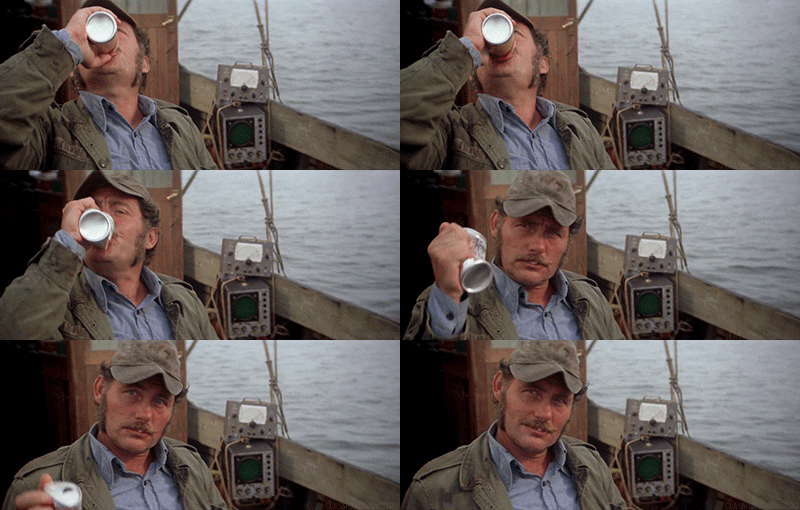
Enter Quint and the reward…
One of the most memorable parts of Jaws is when the town offers a reward for catching the shark.
Finally… but, chaos!
Suddenly everyone gets involved as hoards of fishermen arrive and boats fill the harbour with people who have absolutely no business hunting sharks, yet they act like they’re the experts.
Utter. Chaos.
Even nails-on-a-chalkboard Quint seems like a beast that must be wrangled.
Yep, Quint is basically a land shark.
Nevertheless, this community behaviour highlights an interesting point:
People engage when there’s a shared mission.
Quint, Hooper, and Brody are the best example of this on a microcosm scale…
As they join forces to find the shark in the final act of the film, we are treated to the scar-comparison one-upmanship, drunken ditties, and Quint’s dramatic monologue about the USS Indianapolis sequence.
“You know the thing about a shark is he’s got lifeless eyes. Black eyes. Like a doll’s eyes.”
Summer campaigns work best when people participate…
The strongest summer campaigns aren’t always promotional. Sometimes they’re participatory.
Think:
- Challenges, competitions, and giveaways
- Community projects
- User-generated content (UGC)
- Brand ambassador programmes and loyalty schemes
Because people enjoy being part of something, especially over the summer period when attention is fragmented and routines are different.
Leverage this feeling by making engagement, goodwill, and visibility the priority goal at a time before your audience needs you, so they remember you when the time comes when they do.
…But, what if your brand isn’t exactly summer-themed?
Jaws is undeniably a summer blockbuster.
It’s set on an island, features beach scenes, and the events take place in July.
However, you don’t need a naturally seasonal product to create a summer campaign:
- A software company could launch a ‘Summer Productivity Challenge’
- An HR company could run a ‘Wellbeing Summer Series’
- A finance brand could create a ‘Summer Savings Tracker’
- A procurement platform could offer a ‘September Readiness toolkit’
- A technology provider could launch a ‘Summer Skills Academy’
The campaign doesn’t need to sell summer, but rather solve a problem during summertime.
Remember that most quoted-misquoted line?
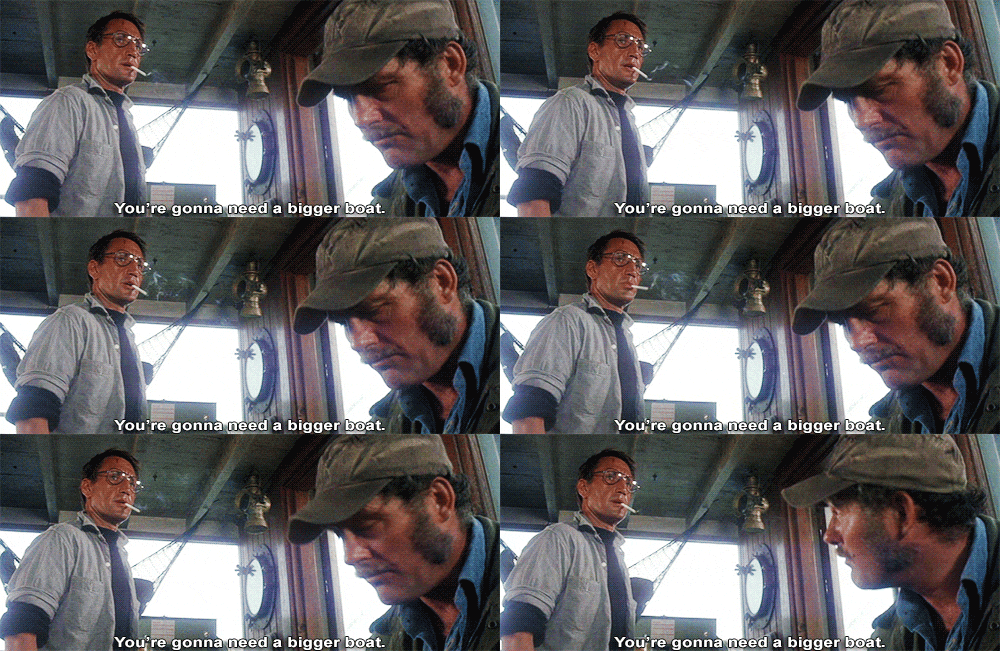
“You’re gonna need a bigger boat.”
It’s not “We’re,” it’s “You’re.” The onus is 100% on Quint.
But, from a marketing perspective, the bigger lesson might be:
“You’re gonna need a clearer message.”
The brands that will win over the summer are usually the ones that:
- Acknowledge real challenges
- Provide reassurance
- Create useful experiences
- Help customers feel prepared
Oh, and a bit(e) of friendly advice:
Don’t wait until someone gets chomped to bits before taking action.
With this in mind…
What’s the biggest “shark” facing your customers right now… and how are you helping them navigate it this summer?
Share your thoughts in the comments, pleaseandthankyou.
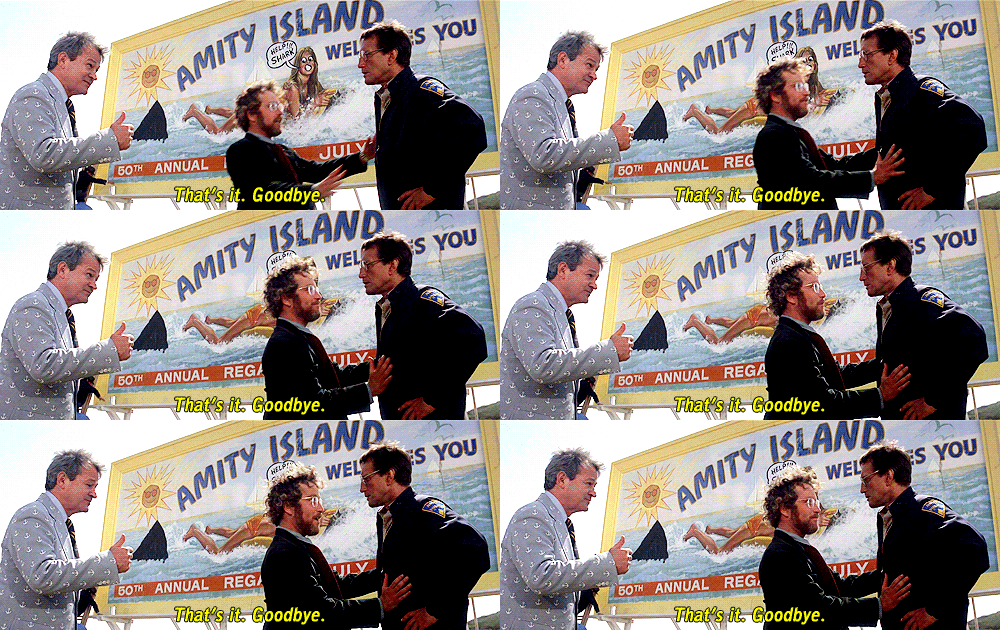
 Fourth Wall Breach